Introduction: Why South African Animals Amaze the World
South Africa is one of the greatest wildlife destinations on Earth. The country holds a breathtaking mix of animals that live across many different habitats. You will find wide savannas, lush wetlands, dramatic coastlines, and desert plains all packed with life.
South African animals are some of the most diverse on the planet. The country records nearly 300 mammal species, over 880 bird species, and roughly 67,000 animal species in total. That number includes everything from the mighty elephant to the tiny pygmy shrew, the world’s smallest mammal.
South Africa ranks as one of only 17 megadiverse countries in the world. This means it holds a remarkable share of Earth’s total biodiversity. Experts rank it sixth globally for overall species richness. Many of its animals exist nowhere else on the planet.
The country is also home to the world’s top safari destination — Kruger National Park — which alone covers nearly 20,000 square kilometres. Whether you dream of watching lions hunt at sunrise or seeing penguins waddle on a Cape Town beach, South Africa delivers every kind of wildlife experience.
This guide takes you through all the incredible South African animals you need to know about — from the famous Big Five to the fascinating creatures of the deep ocean.
The Iconic Big Five South African Animals
No guide to South African animals is complete without the Big Five. This legendary group includes the lion, leopard, African elephant, rhinoceros, and Cape buffalo. The term started with big-game hunters who called these five animals the most dangerous to hunt on foot. Today, every safari visitor dreams of spotting all five.
The Big Five carry deep cultural significance in South Africa. They appear on South African banknotes and represent the heart of the country’s wildlife identity. You can find all five in Kruger National Park, Sabi Sand Game Reserve, Hluhluwe-iMfolozi Park, and many other top reserves across the country.
Spotting all five in a single game drive is rare, but South Africa gives you the best chance of doing so anywhere in Africa. Each animal brings its own thrill. Some, like the elephant and buffalo, are easier to find. Others, like the leopard, demand patience and a skilled guide. Each sighting stays with you forever.
| Animal | Status | Best Park to See It |
| Lion | Vulnerable | Kruger, Sabi Sand, Madikwe |
| Leopard | Vulnerable | Sabi Sand, Londolozi |
| African Elephant | Vulnerable | Addo, Kruger |
| White Rhino | Vulnerable | Hluhluwe-iMfolozi, Kruger |
| Black Rhino | Critically Endangered | Addo, Hluhluwe-iMfolozi |
| Cape Buffalo | Least Concern | Kruger, iSimangaliso |
Lion: The Undisputed King of South African Animals
The lion is the most iconic of all South African animals. This big cat is the largest on the African continent and one of the most powerful predators in the world. A full-grown male lion can weigh up to 225 kg and roam a territory covering hundreds of square kilometres.
Lions are the only truly social big cats. They live in family groups called prides, which can include up to 40 individuals. The lionesses do most of the hunting, working as a coordinated team to take down large prey like buffalo, zebra, and wildebeest. The male’s job is mainly to defend the territory and protect the young.
South Africa has some outstanding lion populations. The Transvaal lion, found across most of the country’s reserves, is famous for the large and impressive manes of the males. In the Timbavati area within Greater Kruger, you can even spot the incredibly rare white lion, a result of a recessive genetic trait found nowhere else in the wild.
Lions are mostly nocturnal, but game drives at dawn and dusk offer the best chance of catching them active. They spend much of the day resting under shady trees to escape the midday heat.
Where to see lions: Kruger National Park, Sabi Sand Game Reserve, Madikwe Game Reserve, Kgalagadi Transfrontier Park.
Leopard: The Most Elusive of All South African Animals
The leopard is one of the most beautiful and most secretive of South African animals. Spotting a leopard in the wild is a moment that wildlife lovers treasure for life. These cats are masters of camouflage. They move silently through the bush and blend perfectly into the dappled light of the African forest.
Leopards are solitary animals and fiercely territorial. Each patrols a large home range and marks its territory with scent. Unlike lions, leopards prefer to hunt alone. They are incredibly powerful — a leopard can carry prey much heavier than itself high up into a tree to keep it away from lions and hyenas.
They are mostly active after dark. During the day, you are most likely to spot a leopard draped over a tree branch or hidden in dense bush. The Sabi Sand Game Reserve, which shares an unfenced border with Kruger, is one of the best places in the world for leopard sightings. Expert guides there have built generations of trust with the local leopards.
Where to see leopards: Sabi Sand Nature Reserve, Londolozi Private Game Reserve, Kruger National Park, Phinda Private Game Reserve.
Elephant: South Africa’s Gentle Genius
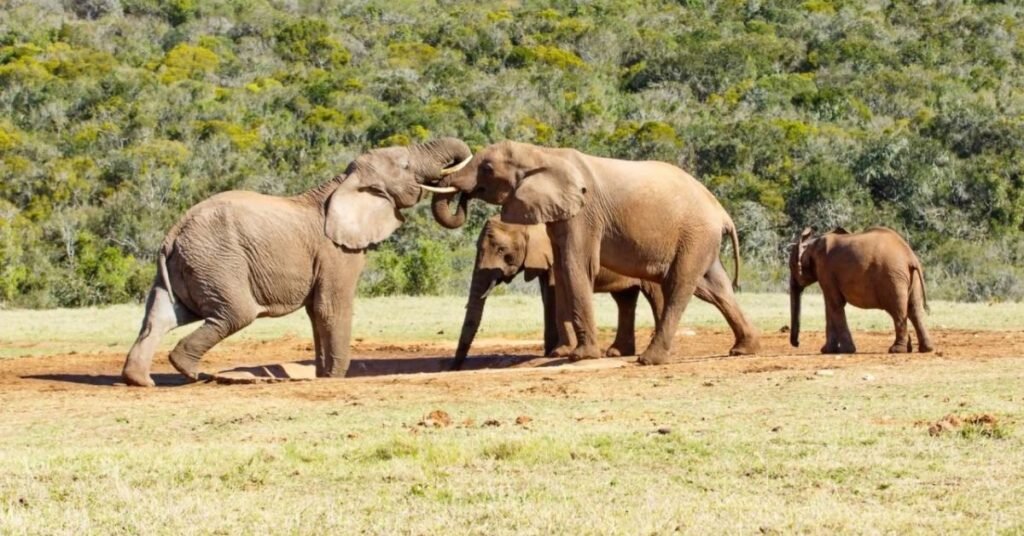
The African elephant is the largest land animal on Earth and one of the most emotionally intelligent of all South African animals. These towering creatures can stand up to 4 metres tall and weigh over 6,000 kg. Despite their enormous size, they move with surprising grace and quiet through the bush.
Elephants live in tight-knit family herds led by an experienced older female called a matriarch. She remembers water sources, migration routes, and old friends from many years past. Elephants have a remarkable memory that helps them survive in the wild. They communicate through deep rumbles, some too low for humans to hear.
In South Africa, elephants are mostly protected inside national parks. Addo Elephant National Park in the Eastern Cape holds over 550 elephants and is one of the safest places in Africa to watch these giants up close. Kruger National Park supports around 12,000 elephants, making it one of the richest populations on the continent.
Sadly, poaching for ivory remains a serious threat. Anti-poaching teams work day and night to keep South Africa’s elephant herds safe.
Where to see elephants: Addo Elephant National Park, Kruger National Park, Pilanesberg National Park, Tembe Elephant Park.
Rhino: South Africa’s Conservation Champion
South Africa is the most important country in the world for rhino conservation. It is home to both the white rhino and the much rarer black rhino. The white rhino story is one of the greatest conservation comebacks in history. In the early 1900s, fewer than 20 white rhinos survived on Earth. Thanks to dedicated conservation at Hluhluwe-iMfolozi Park in KwaZulu-Natal, the population grew back to around 16,000 animals.
The black rhino faces a much harder road. In 2025, only around 6,788 black rhinos remain in the wild worldwide, making it one of the most critically endangered large animals on the planet. Poaching for rhino horn drives much of this crisis. Rhino horn is illegally traded to Southeast Asia, where it is used in traditional medicine and as a status symbol.
Despite their similar name, white and black rhinos are quite different. White rhinos are larger and have a wide, square lip for grazing on grass. Black rhinos are smaller with a pointed, hooked lip for browsing on leaves and shrubs. Black rhinos are also notably more aggressive and harder to approach.
South Africa’s anti-poaching rangers use drones, thermal cameras, and tracking dogs to protect these ancient animals every single day.
Cape Buffalo: South Africa’s Toughest Herbivore
The Cape buffalo is the most powerful herbivore among South African animals and the one that makes even experienced guides the most nervous. A large bull can weigh close to 900 kg and carries a set of curved, fused horns known as a “boss” that acts like a natural helmet. Buffaloes have a reputation for being unpredictable and holding grudges — they have been known to ambush and charge humans who have previously threatened them.
Despite their tough reputation, buffalo are highly social animals. They live in large herds that can number in the hundreds. When a predator threatens the herd, buffalo form a defensive circle to protect the young. You will often see oxpecker birds riding on the backs of buffalo, pecking out ticks and insects from their tough skin.
Watching a massive buffalo herd move across the savanna in Kruger National Park is one of the most powerful sights in all of African wildlife. The sheer mass and energy of hundreds of these animals moving together is truly unforgettable.
Where to see buffalo: Kruger National Park, iSimangaliso Wetland Park, Hluhluwe-iMfolozi Park.
Beyond the Big Five: More Amazing South Africa Animals
South Africa’s wildlife extends far beyond the Big Five. Many other creatures are just as exciting to see on safari. Here are some of the most remarkable ones.
Cheetah — the world’s fastest land animal, capable of reaching speeds over 110 km/h. Unlike other big cats, cheetahs hunt during the day. South Africa runs active cheetah conservation programs, making sightings more accessible than in many other African countries.
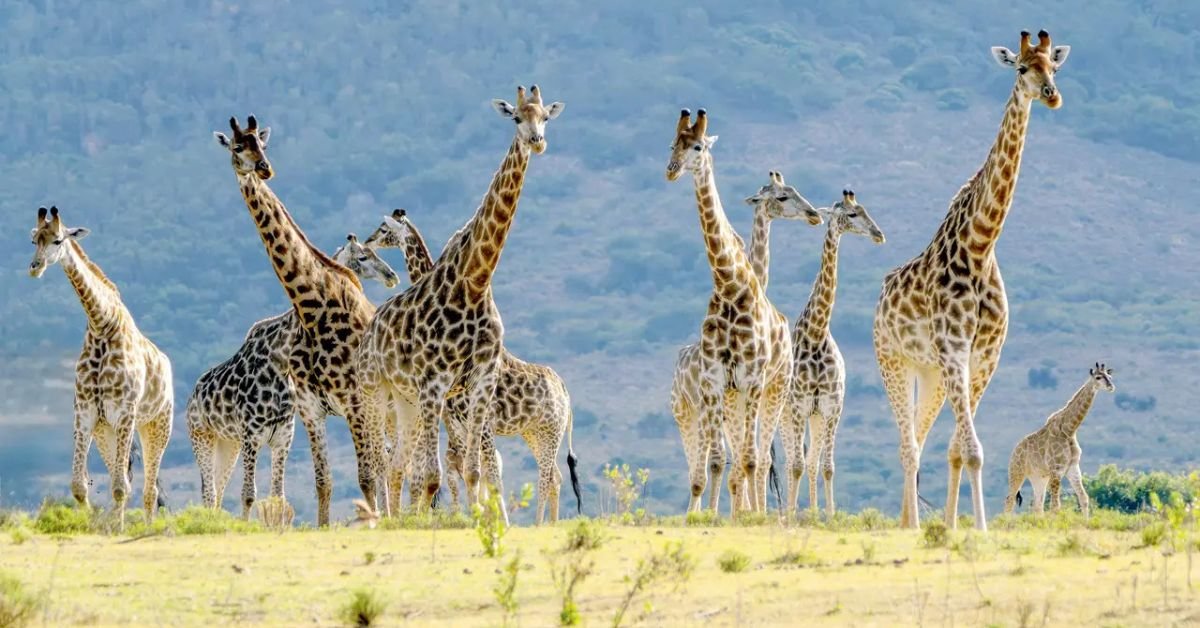
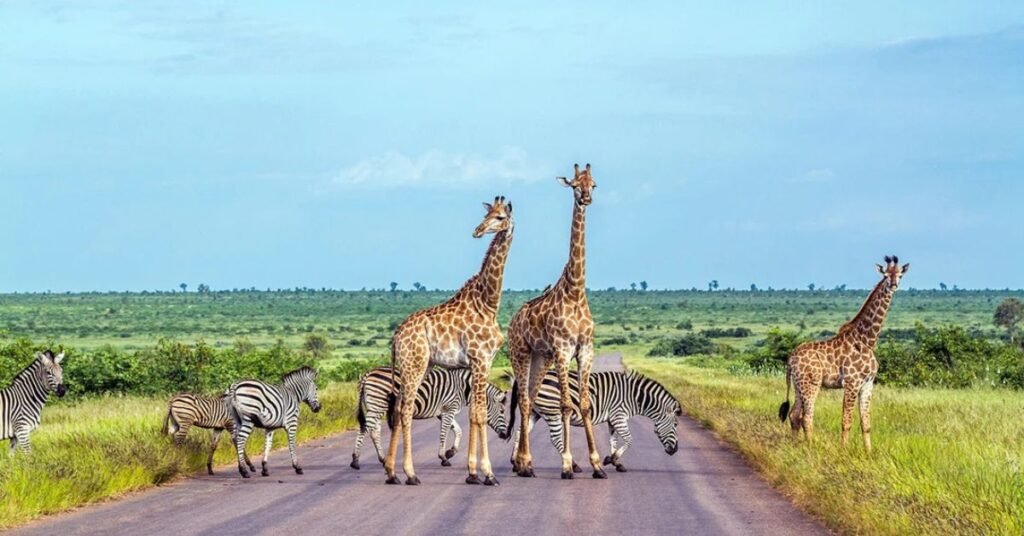
Giraffe — the world’s tallest animal, with a neck long enough to reach leaves high in acacia trees. Giraffes roam the savanna with graceful ease and are easy to spot from a great distance.
Hippopotamus — these massive animals spend most of their day submerged in rivers and lakes to keep cool. Despite their slow, peaceful appearance, hippos are considered one of the most dangerous animals in Africa. They are highly territorial and move surprisingly fast on land.
African Wild Dog — also called the painted dog because of its colourful, mottled coat. Wild dogs are the most efficient large predators in Africa, with a hunting success rate of up to 80%. They are sadly endangered and exist in only a handful of South African reserves, including Madikwe and Kruger.
Zebra — these bold black-and-white animals roam in large herds across the South African savanna. Their stripes are thought to confuse predators and repel biting flies. Plains zebras are extremely common in Kruger, while the rare Cape mountain zebra is found in the south.
Meerkat — one of the most entertaining South Africa animals, meerkats live in the Kalahari Desert in family groups. They stand upright on their hind legs to keep watch for predators, taking turns as the lookout. Seeing a meerkat clan emerge at sunrise is a truly magical experience.
Nile Crocodile — one of Africa’s deadliest predators, the Nile crocodile lurks in rivers and estuaries. Kruger’s rivers support healthy populations. These ancient reptiles can grow over 5 metres long and are powerful ambush hunters.
South Africa Birds: A World-Class Birdwatching Destination
South Africa is one of the finest birdwatching destinations on the planet. As of mid-2025, South Africa records 880 bird species, including around 70 endemic species found nowhere else on Earth. From vibrant sunbirds to massive raptors and flightless giants, the variety of birds mirrors the country’s remarkable landscape diversity.
The Blue Crane is South Africa’s national bird. It is an elegant, slate-blue bird of the open grasslands. Classified as vulnerable, the blue crane faces threats from habitat loss and power line collisions.
The Ostrich is the world’s largest bird and cannot fly. It grows up to 2.7 metres tall and runs at speeds of up to 70 km/h. The Western Cape’s Karoo region is the heartland of ostrich farming in South Africa, and the town of Oudtshoorn is known as the “ostrich capital of the world.”
The African Penguin lives on South Africa’s coastline and is one of the country’s most beloved birds. The most popular colony is at Boulders Beach near Cape Town, where visitors walk along a boardwalk just metres from hundreds of penguins. In 2025, African penguins are sadly critically endangered, with fewer than 19,800 mature individuals remaining in the wild.
The Secretary Bird is a remarkable ground-hunting raptor. It walks through the grass on long legs and kills snakes by stamping on them with enormous force. Watching a secretary bird hunt is one of the most dramatic wildlife sights in South Africa.
The Cape Sugarbird and Orange-Breasted Sunbird are dazzling endemic birds found in the fynbos shrublands of the Western Cape. They feed on nectar from proteas and ericas and play an important role in pollination.
The Martial Eagle is Africa’s largest eagle, with a wingspan of up to 2.6 metres. It soars high on thermals and dives powerfully on prey as large as small antelope.
Reptiles and Amphibians: South Africa’s Hidden Wildlife
South Africa has the richest diversity of reptiles of any African country. The country records over 400 terrestrial reptile species, and new ones are still being discovered. More than half of South Africa’s reptile species exist nowhere else on Earth.
The Nile crocodile is the largest and most dangerous reptile in South Africa. It is an apex predator in the rivers of Kruger National Park and iSimangaliso Wetland Park. The leopard tortoise is the fourth-largest tortoise species in the world and a delightful sight on game drives. It has a beautifully patterned shell and can live for over 100 years.
South Africa is home to some of the world’s most venomous snakes. The black mamba is the longest venomous snake in Africa, growing up to 4.3 metres. Its venom is extremely toxic and fast-acting. The puff adder causes more snakebite fatalities across Africa than any other species, largely because it blends into the ground and people accidentally step on it.
Among South Africa’s fascinating endemic reptiles are the geometric tortoise, one of the rarest tortoises on Earth, and numerous species of dwarf chameleon found in specific regions of the country.
Amphibians also add to South Africa’s rich wildlife picture. The critically endangered Rose’s ghost frog exists only on the slopes of Table Mountain in Cape Town. The western leopard toad is another endemic amphibian that breeds in Cape Town’s gardens and wetlands each winter.
Marine Animals: South Africa’s Ocean Wonders
South Africa’s coastline stretches over 2,500 km and hosts one of the richest marine environments on Earth. The country ranks third in the world for marine species endemism, meaning a remarkable share of its ocean life exists nowhere else. Around 40% of an estimated 10,000 marine species found in South African waters are unique to the region.
The Western Cape has popularised the concept of the Marine Big Five: whales, dolphins, sharks, seals, and penguins. Each one offers a spectacular wildlife encounter.
Southern Right Whales visit South Africa’s coast between June and December every year. The coastal town of Hermanus is world-famous for whale watching. It even employs a whale crier who blows a horn and announces whale sightings to the town. Watching a southern right whale breach close to shore is an experience unlike any other.
Great White Sharks are a major attraction in Gansbaai, widely known as the shark capital of the world. Cage diving with great whites lets you come face-to-face with one of the ocean’s most powerful predators in complete safety.
Cape Fur Seals gather in boisterous colonies at Hout Bay, Cape Cross, and other coastal sites. Bottlenose and common dolphins swim in schools of up to 300 individuals along the coast, delighting boat trip visitors.
The annual Sardine Run off the KwaZulu-Natal coast is one of the greatest natural spectacles on Earth. Billions of sardines move northward along the coast in a massive shoal, attracting dolphins, sharks, whales, gannets, and seabirds in a feeding frenzy that has to be seen to be believed.
Endemic South African Animals Found Nowhere Else
South Africa’s endemic animals are among its most precious wildlife treasures. These are creatures found only within the country’s borders.
The Springbok is the national animal of South Africa. This elegant antelope is famous for its extraordinary leaping display called “pronking”, where it jumps up to 2 metres high with an arched back. Springboks are common across the dry Karoo and bushveld regions and move in large herds.
The Bontebok is a striking antelope with a rich brown coat and white facial blaze. Its population once fell dangerously low, but careful conservation work brought it back. Today it thrives in the Western Cape.
The Black Wildebeest is another uniquely South African antelope. It roams the central grasslands in large herds and is famous for its peculiar, excitable behaviour during the rutting season.
Other notable endemic mammals include the Cape Mole-Rat, Cape Elephant Shrew, and Cape Horseshoe Bat. On the reptile side, the Geometric Tortoise and several dwarf chameleon species call South Africa home and nowhere else.
Endangered South African Animals That Need Our Help
While South Africa leads the world in wildlife conservation, many of its animals still face serious threats. In 2025, an estimated 20% of South Africa’s mammals and 10% of South Africa’s birds and frogs are at risk of extinction.
The African Wild Dog is one of the most endangered carnivores in Africa. Habitat loss, disease, and conflict with livestock farmers have pushed wild dog numbers dangerously low. South Africa actively manages a metapopulation of wild dogs across multiple reserves to keep the species stable.
The African Penguin is now critically endangered. In 2025, only around 19,800 mature individuals remain in the wild. Shifting fish stocks due to climate change and overfishing are the primary drivers of their decline.
The Black Rhino is critically endangered worldwide. In 2025, approximately 6,788 black rhinos exist globally, with poaching remaining the single biggest threat to their survival.
The Riverine Rabbit is one of the rarest mammals in Africa. It lives only in the Karoo region of South Africa and faces severe habitat loss from agriculture.
South Africa fights back against these threats with intensive anti-poaching operations, community conservation programs, and partnerships between government and private game reserves. The model has produced genuine successes and gives real hope for the future.
Best Places to See South African Animals
South Africa has over 550 national parks and nature reserves. Here is a guide to the top destinations for wildlife viewing.
| Park / Reserve | Top Animals | Best Season | Malaria Risk |
| Kruger National Park | Big Five, wild dog, 500+ birds | May – September | Yes (take precautions) |
| Addo Elephant National Park | Elephants, Big Seven | Year-round | No |
| Hluhluwe-iMfolozi Park | White & black rhino, Big Five | May – October | Low |
| Sabi Sand Game Reserve | Leopard, Big Five | May – September | Yes |
| Kgalagadi Transfrontier Park | Cheetah, lion, raptors | June – August | No |
| Madikwe Game Reserve | Wild dog, Big Five | May – September | No |
| Pilanesberg National Park | Big Five | Year-round | No |
| iSimangaliso Wetland Park | Hippo, crocs, birds | October – April | Low |
| Boulders Beach (Cape Town) | African penguins | Year-round | No |
| Hermanus (Whale Coast) | Southern right whales | June – December | No |
Best Time to See South Africa Animals
Timing your visit well makes a big difference to the South African animals you get to see. Here is what to expect each season.
Dry Season (May to September) is the best time for game viewing across most of South Africa. Vegetation is low, animals gather around shrinking water sources, and sightings are frequent and clear. August and September are especially rewarding as water becomes scarcer and predator activity peaks.
Wet Season (November to April) brings lush green landscapes. Birdwatching is at its best during these months as migratory species arrive from Europe and other parts of Africa. Many animals give birth during the summer, so you may spot adorable baby animals across the reserves.
Winter (June to August) is ideal for whale watching along the Western Cape coast. Early morning game drives can be cold, so pack warm layers. The cool, dry air also makes for crystal-clear photography conditions.
Year-round — some wildlife experiences work in any season. African penguins at Boulders Beach are present all year. Nile crocodiles and hippos in iSimangaliso are active regardless of season. Addo Elephant Park offers excellent elephant viewing throughout the year.
Read for more info: https://wildtrailsapp.com/brumbies-horses/
Conservation of South African Animals: A Global Success Story
South Africa has built one of the most sophisticated wildlife conservation systems in the world. The model works because it brings together government, private game reserves, and local communities in a shared mission to protect South Africa’s animals.
The recovery of the white rhino is one of conservation’s greatest achievements. Hluhluwe-iMfolozi Park led the effort that brought this species back from near extinction. Today, it serves as a model for other endangered species recovery programs worldwide.
South Africa also leads continental efforts in cheetah and wild dog conservation through carefully managed metapopulation programs. Animals are strategically moved between reserves to maintain genetic diversity and prevent inbreeding.
Anti-poaching efforts continue to evolve. Rangers now use drones, thermal imaging cameras, trained sniffer dogs, and advanced tracking technology to detect and stop poachers before they reach their targets. These efforts have significantly reduced poaching numbers in several key reserves.
Community-based conservation is equally important. When local communities benefit economically from wildlife tourism, they become its most passionate protectors. This approach helps both people and animals thrive together.
Conclusion: South Africa’s Animals Are a Living Treasure
South African animals represent one of the greatest concentrations of wildlife beauty and biodiversity anywhere on Earth. From the thundering herds of elephant in Addo to the acrobatic dolphins off the Western Cape coast, from the silent, watchful leopard in Sabi Sand to the comical waddling penguins of Boulders Beach — every corner of this country holds something extraordinary.
The country’s commitment to conservation, its world-class national park system, and its deep cultural connection to wildlife make South Africa truly unique. Each year, millions of visitors travel from across the globe just to witness these animals in their natural environment.
Whether you plan a classic safari through Kruger, a whale-watching trip from Hermanus, or a walk on the boardwalk at Boulders Beach, South African animals will give you memories that last a lifetime. There is no better place on Earth to experience the raw, honest beauty of the wild
Frequently Asked Questions About South African Animals
Q1. What are the Big Five South African animals?
The Big Five South African animals are the lion, leopard, African elephant, rhinoceros, and Cape buffalo. This famous group originally referred to the five most dangerous animals to hunt on foot in Africa. Today, it describes the five animals that safari visitors most want to see.
All five live across multiple national parks and game reserves in South Africa. Kruger National Park is the most famous destination for Big Five sightings, though Sabi Sand, Madikwe, and Pilanesberg are also excellent choices. Each of the Big Five brings its own unique thrill on safari.
Q2. What is the national animal of South Africa?
The springbok is the proud national animal of South Africa. This elegant medium-sized antelope is known for a spectacular jumping display called “pronking”, where it leaps up to 2 metres into the air with a stiff-legged, arched back.
The springbok roams the dry Karoo and bushveld regions. It is also the emblem of South Africa’s national rugby team, the Springboks, which is one of the most successful rugby teams in the world. The springbok symbolises speed, agility, and resilience — values that South Africans hold dear.
Q3. Where is the best place in South Africa to see wildlife?
Kruger National Park is the most famous and widely visited wildlife destination in South Africa. It covers nearly 20,000 square kilometres and supports healthy populations of the Big Five, plus hundreds of bird species, wild dogs, cheetahs, and much more.
For a more exclusive experience, private reserves like Sabi Sand Game Reserve offer luxury lodges and expert-guided drives with exceptional leopard sightings. For a malaria-free option, Madikwe Game Reserve or Pilanesberg National Park are excellent alternatives with strong Big Five viewing.
Q4. What are the most dangerous animals in South Africa?
South Africa has several genuinely dangerous animals. The hippopotamus is considered Africa’s most dangerous large mammal, responsible for many human deaths each year. The Cape buffalo is famous for its unpredictable aggression. The Nile crocodile is a deadly ambush predator in rivers and lakes.
Among reptiles, the black mamba is the most feared snake due to its powerful venom and speed. The puff adder causes more snakebite deaths than any other African snake. On the ocean side, the great white shark patrols South Africa’s coast. Despite these risks, attacks on tourists are extremely rare when safety guidelines are followed.
Q5. When is the best time of year to visit South Africa for wildlife?
The dry season from May to September is the best time for game viewing across most of South Africa. During these months, vegetation thins out, animals gather at water sources, and sightings are clear and frequent. August and September are especially productive as water becomes scarce. For whale watching, plan your visit between June and December when southern right whales appear along the Western Cape coast. For birdwatching, the wet season from November to April is ideal, as migratory birds arrive and resident species are in peak breeding plumage. For penguins at Boulders Beach, any time of year works well.