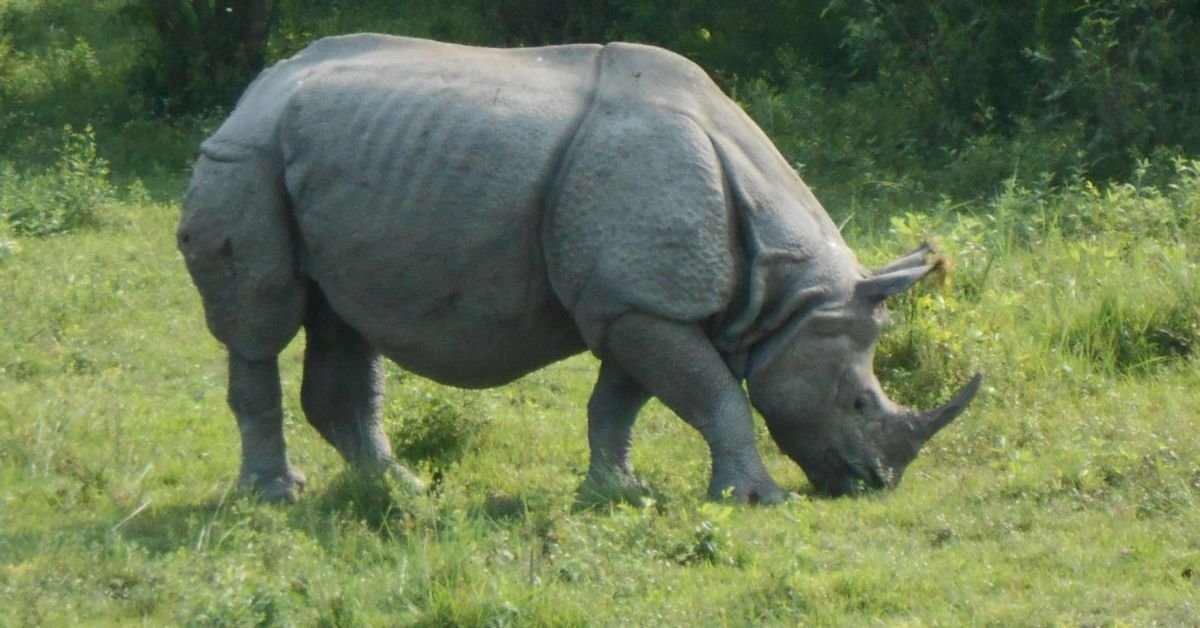
Do Rhinos Live in California?
Many people ask: Are there rhinos in California? The short answer is yes — but not in the wild. You will never spot a rhino roaming the hills of the Sierra Nevada or wandering through a California forest. Rhinos are native to Africa and Asia, and they have no natural wild presence anywhere in North America.
However, rhinos in California do exist in accredited zoos, wildlife preserves, and conservation sanctuaries across the state. These carefully managed environments are designed to mimic the animals’ natural habitats as closely as possible. The animals receive expert veterinary care, proper nutrition, and plenty of space to live healthy, comfortable lives.
California plays a unique and powerful role in global rhino conservation. The state is home to some of the world’s most respected wildlife organizations. These institutions do much more than display animals — they actively work to save the rhino species from extinction.
So while you cannot hike alongside a rhino in the wild here, you can absolutely see them up close at several outstanding facilities. California has become one of the most important states in the world for rhino care and conservation research.
Where Can You See Rhinos in California?
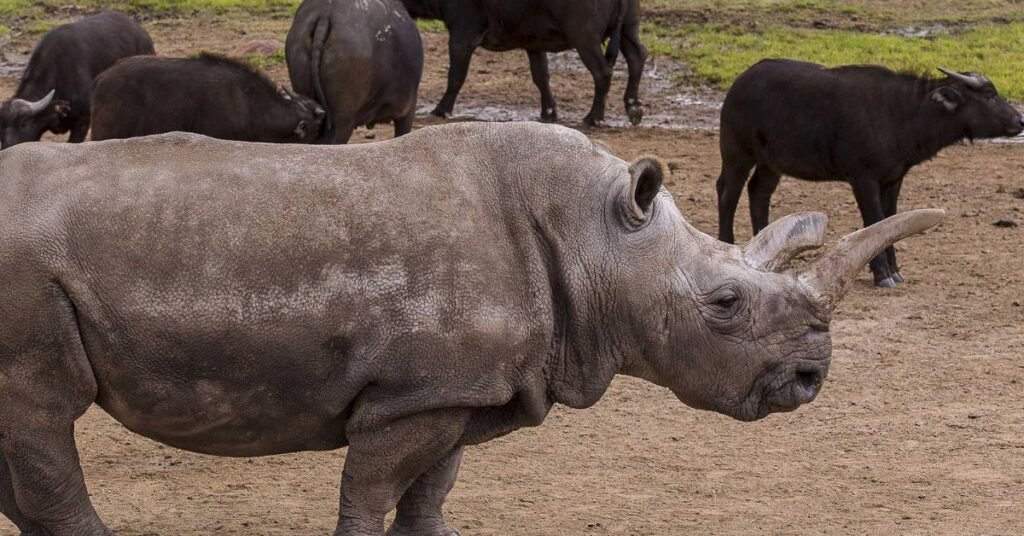
California is home to several world-class facilities that house rhinos. Each one plays a different but equally important role in protecting these magnificent animals. Here is a look at the key places where you can see rhinos in California today.
| Facility | Location | Rhino Species Housed | Notable Feature |
| San Diego Zoo Safari Park | Escondido | Southern white, black, greater one-horned | World’s largest managed rhino group |
| Safari West | Santa Rosa | Southern white | Baby rhino “Ozzy” born July 2025 |
| Monterey Zoo | Monterey | Southern white | Award-winning Africa Savannah Exhibit |
| Sacramento Zoo | Sacramento | Southern white | First-ever rhino in its 96-year history |
| San Diego Zoo | San Diego | White and greater one-horned | Rhino care since 1952 |
San Diego Zoo Safari Park: The Rhino Capital of California
When people think about rhinos in California, the first place that comes to mind is the San Diego Zoo Safari Park in Escondido. This iconic facility holds the title of having the largest managed group of rhinos in the entire world. It is truly the global leader in rhino conservation and breeding.
The San Diego Zoo first began caring for rhinos back in 1952. A decade later, in 1963, the Safari Park welcomed greater one-horned rhinos as some of its original wildlife. Today, the Safari Park cares for three species of rhinos — southern white rhinos, black rhinos, and greater one-horned rhinos.
The park has proudly raised five generations of black rhinos and seven generations of greater one-horned rhinos. That is a remarkable conservation achievement that few places on earth can match.
The Safari Park also runs the Nikita Kahn Rhino Rescue Center, which is specifically designed to give top-level care to rhinos. Over 100 rhino calves have been born at the Safari Park, making it the world leader in white rhino breeding. Scientists at the center also conduct groundbreaking research into assisted reproductive technologies, including artificial insemination and in vitro fertilization.
This research may one day help bring the critically endangered northern white rhino back from the brink of extinction. Only two northern white rhinos remain alive on Earth today — both in Kenya — and neither can breed naturally. The Safari Park’s frozen genetic material and scientific expertise give this species its best shot at survival.
Safari West: A Wild Encounter in Sonoma County
Safari West in Santa Rosa offers one of the most unique and immersive wildlife experiences in California. This nationally recognized wildlife preserve sits in the heart of Sonoma County’s wine country. It does not feel like a typical zoo at all — it feels like stepping into the African savannah.
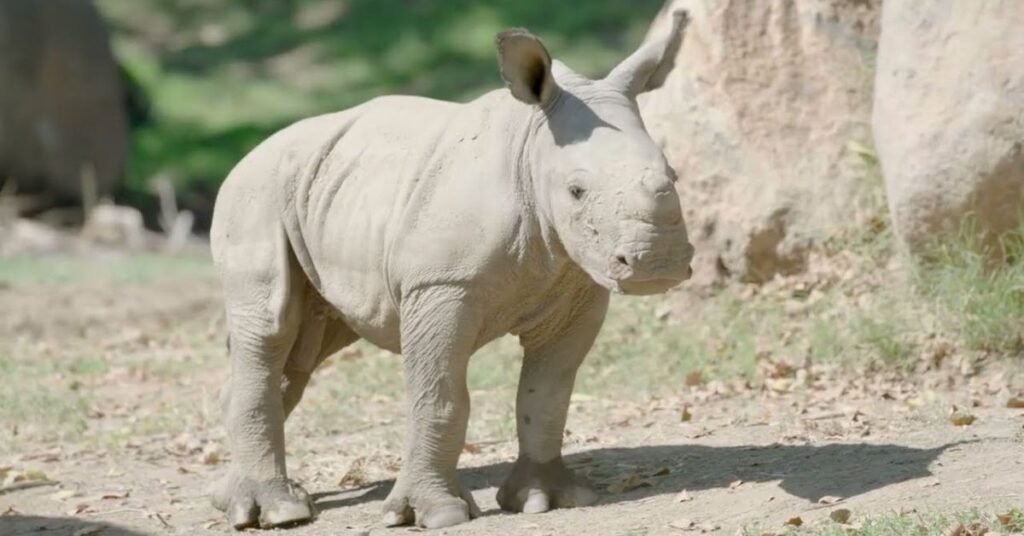
Safari West made international headlines in July 2025 when it welcomed a new southern white rhino calf. The baby was born on July 22, 2025 — the very same day that rock legend Ozzy Osbourne passed away. In a touching tribute, the preserve named the calf “Ozzy” in honor of the music icon.
The calf was born to 20-year-old mother Eesha and 29-year-old father Ongava. It was a deeply symbolic moment — a new life beginning on the same day the world said goodbye to a beloved legend.
Ozzy is not the first rhino born at Safari West. His older brother Otto was born there in April 2023. The rhinos at Safari West live in open, naturalistic environments where guests can observe them during guided safari tours. The facility works in close partnership with the Indianapolis Zoo, which holds ownership of the father Ongava and the new calf.
This kind of cross-institution collaboration is essential for maintaining healthy genetic diversity among rhinos in California and across North America. The Safari West team describes their mission simply: conservation begins with connection.
Monterey Zoo and Sacramento Zoo: Growing the Rhino Family
California’s commitment to rhinos stretches beyond San Diego. Two other facilities have recently expanded their rhino programs in exciting ways.
Monterey Zoo proudly houses southern white rhinos as part of its award-winning, multi-species African Savannah Exhibit. Southern white rhinos are among the largest and heaviest land mammals in the world. Females can grow to approximately 3,750 pounds, while males can reach over 5,000 pounds.
They have two horns, with the front horn averaging over three feet in length as adults. The Monterey Zoo gives California residents in the central coast area a chance to see these powerful animals up close and learn about why their conservation matters so much.
The Sacramento Zoo created its own piece of history when it welcomed its very first rhinoceros. A 28-year-old southern white rhino named J Gregory — or “J Greg” for short — arrived from the San Diego Zoo Safari Park. It marked the first time in the zoo’s 96-year history that a rhino called it home. J Greg previously served as a primary male breeder at the Safari Park, contributing six offspring during his time there.
His transfer to Sacramento was part of the Species Survival Plan, a coordinated national effort to ensure genetic diversity in zoo populations of at-risk animals. His calm personality made the complex transport of a multi-thousand-pound animal go smoothly.
The Five Rhino Species: What You Need to Know
To truly appreciate rhinos in California and the conservation work happening here, it helps to understand the five rhino species that exist in the world today.
| Species | Range | IUCN Status | Estimated Wild Population |
| Southern White Rhino | Southern Africa | Near Threatened | ~15,752 |
| Northern White Rhino | Central Africa | Critically Endangered | 2 (both in Kenya) |
| Black Rhino | Eastern & Southern Africa | Critically Endangered | ~6,788 |
| Greater One-Horned Rhino | India & Nepal | Vulnerable | ~4,075 |
| Javan Rhino | Indonesia | Critically Endangered | ~50 |
| Sumatran Rhino | Indonesia | Critically Endangered | 34–47 |
The southern white rhino is the species most commonly seen at California facilities. It is also the conservation world’s biggest success story. At one point in the early 1900s, fewer than 100 southern white rhinos survived in the wild.
Thanks to sustained protection and breeding programs, that number has grown to over 15,000. However, recent years have seen a decline again due to drought and poaching, with numbers dropping from 17,464 in 2023 to 15,752 by the end of 2024.
The black rhino and greater one-horned rhino are also housed at California facilities. Both species have shown encouraging population growth in recent years, but they still face serious threats.
Why Rhino Conservation in California Matters Globally
California’s role in rhino conservation goes far beyond state borders. The work done here directly impacts wild populations in Africa and Asia. The San Diego Zoo Wildlife Alliance alone collaborates with international partners on multiple continents to protect rhinos in their native habitats.
The organization supports anti-poaching units in Africa, helps create and protect reserves, and works to reintroduce black rhinos into areas where they once lived. Scientists at the Safari Park’s Frozen Zoo — a world-famous biobank — store genetic material from hundreds of species.
This material is a crucial lifeline. In 2024, scientists achieved the world’s first IVF rhino pregnancy by transferring a lab-grown white rhino embryo into a surrogate mother. This kind of breakthrough research, rooted in California, gives the entire world reason for hope.
Rhino horn has long been a driver of illegal poaching. The horn is made entirely of keratin — the same material found in human hair and fingernails. It has no proven medical properties. Yet demand for it in parts of Asia and the Middle East has driven rhinos close to extinction.
A 2025 study found that dehorning rhinos reduces poaching by as much as 80%. California-based organizations actively fund anti-poaching operations and community engagement programs in rhino range countries. Their work helps ensure that wild rhinos have a future.
Read for more info: https://wildtrailsapp.com/how-fast-can-a-dove-fly/
The Northern White Rhino: California’s Role in Saving the Rarest Animal
The northern white rhino is the rarest large mammal on Earth. Only two individuals remain alive — both females named Najin and Fatu, living under 24-hour armed guard at Ol Pejeta Conservancy in Kenya. Neither can reproduce naturally. Without intervention, this subspecies faces certain extinction.
The San Diego Zoo Wildlife Alliance has made saving the northern white rhino a core organizational mission. Scientists at the Safari Park are working to develop embryos using genetic material from the Frozen Zoo, which holds biological samples collected from northern white rhinos over many decades.
The goal is to create viable embryos through advanced lab techniques and transfer them into southern white rhino surrogates. This is some of the most complex and ambitious conservation science ever attempted anywhere in the world — and it is happening right here in California.
Researchers are optimizing protocols to grow and maintain stem cells, reproductive organoids, and primordial germ cells. Every small step forward brings the species closer to survival. California’s scientific community and the resources of the Safari Park represent perhaps the northern white rhino’s last real hope.
Threats Facing Rhinos Today
Understanding the threats facing rhinos helps explain why conservation work in California is so urgent and important. Rhinos face two major threats worldwide: poaching and habitat loss.
Poaching remains a devastating problem. In 2024, Africa recorded 516 rhino poaching incidents — the lowest total since 2011. While that trend is encouraging, it still represents the loss of about 2.15% of the total population each year. To achieve real population growth, losses need to fall below 1.2% annually. Worryingly, 2025 has already seen a surge in poaching activity. In just the first three months of 2025, 91 rhinos were killed in South Africa alone.
Habitat loss is equally dangerous, especially for the Asian rhino species. The Sumatran rhino faces catastrophic deforestation driven by the palm oil and paper industries. Only an estimated 34 to 47 Sumatran rhinos remain in the wild, making it one of the most critically endangered mammals on the planet.
The Javan rhino is in an even more precarious position. Poachers killed roughly 26 Javan rhinos between 2019 and 2023 — equal to about one-third of the entire known population. Today, approximately 50 Javan rhinos survive, all in a single national park in Indonesia.
Climate change adds another layer of pressure. Extended droughts in Africa are reducing water sources and food availability, pushing rhinos into conflict with humans and weakening already fragile populations.
How California Residents Can Help Rhinos
You do not need to travel to Africa to help rhinos in California and beyond. There are real, practical ways for California residents to make a difference for these endangered animals.
Visiting accredited facilities like the San Diego Zoo Safari Park, Safari West, Monterey Zoo, or Sacramento Zoo directly supports conservation programs through admission fees. Many of these organizations also offer adoption programs where you can symbolically adopt a rhino and fund its care.
Donating to organizations like the San Diego Zoo Wildlife Alliance or the International Rhino Foundation sends resources directly to anti-poaching efforts, habitat protection, and breeding programs.
Spreading awareness matters, too. When you share information about rhino conservation with friends and family, you help build public support for the policies and funding that protect these animals. Choosing certified sustainable palm oil products reduces your contribution to habitat destruction in Indonesia. Being an informed and engaged citizen is one of the most powerful things anyone can do.
Conclusion
Rhinos in California are not a wild phenomenon — but they represent something even more powerful. They are the frontline of a global effort to save one of Earth’s most ancient and magnificent animals from extinction.
California’s zoos, wildlife preserves, and conservation scientists are doing extraordinary work. From the San Diego Zoo Safari Park’s world-leading breeding programs to Safari West’s touching birth of baby Ozzy, the Golden State is deeply connected to the future of rhinos worldwide.
The challenges are real. Poaching, habitat loss, and climate change continue to threaten all five rhino species. But the progress is also real. Black rhino populations are growing. The first IVF rhino pregnancy has been achieved. Communities across Africa and Asia are becoming partners in protection.
Every rhino born in California is a win for the entire planet. The next time you visit one of these remarkable facilities and stand face to face with a rhino, remember — you are looking at a living symbol of what humanity can achieve when it chooses to protect rather than destroy.
Frequently Asked Questions About Rhinos in California
Q1: Are there wild rhinos in California?
No, there are no wild rhinos in California. Rhinos are native to Africa and Asia and have no natural wild population anywhere in North America. However, California is home to several accredited zoos and wildlife preserves that house rhinos in carefully managed, naturalistic environments.
Q2: Where is the best place to see rhinos in California?
The best place to see rhinos in California is the San Diego Zoo Safari Park in Escondido. It houses the largest managed group of rhinos in the world and cares for three different species. Safari West in Santa Rosa is another outstanding option, especially after the birth of baby Ozzy in July 2025.
Q3: What species of rhinos can you see in California?
You can see southern white rhinos, black rhinos, and greater one-horned rhinos at various facilities across California. The southern white rhino is the most commonly housed species at California zoos and preserves.
Q4: Is the San Diego Zoo doing anything to save the northern white rhino?
Yes. The San Diego Zoo Wildlife Alliance is actively working to save the northern white rhino through cutting-edge science. Scientists at the Safari Park are developing assisted reproductive technologies, including IVF and embryo transfer techniques, using genetic material stored in the Frozen Zoo biobank. Only two northern white rhinos remain on Earth, and this California-based research represents one of the species’ best chances at survival.
Q5: Can you interact with rhinos in California?
Yes, some facilities offer special rhino encounter experiences. Safari West, for example, offers up-close rhino encounters where guests may get to interact with the animals directly. The San Diego Zoo Safari Park also offers behind-the-scenes experiences. These encounters help build public awareness and fund conservation programs.