Introduction: Why Philippine Mammals Are So Special
The Philippines is one of the most remarkable places on Earth for wildlife. This island nation sits in Southeast Asia and stretches across more than 7,600 islands. It is one of only 17 “megadiverse” countries in the entire world. That means it holds an extraordinary amount of life in a small area.
When it comes to Philippine mammals, the numbers are truly stunning. The country is home to at least 225 native terrestrial mammal species. Out of these, more than 130 are endemic — meaning they exist only in the Philippines and nowhere else on Earth. Among non-flying land mammals, the endemism rate reaches a remarkable 91%. That is one of the highest rates found anywhere in the world.
The reason for this richness is the country’s geography. Each island acts like a natural laboratory. Populations of animals got separated over millions of years. They then evolved in their own unique ways. This process, known as adaptive radiation, gave rise to an incredible variety of species. Researchers and scientists continue to discover new species even today.
Whether you love wildlife, travel, or nature, the Philippines mammals will leave you amazed. This guide covers the most fascinating species, their habitats, and why protecting them matters now more than ever.
The Tarsier: The Philippines’ Most Famous Mammal
No discussion of Philippine mammals is complete without talking about the Philippine tarsier (Carlito syrichta). This tiny creature is one of the most remarkable small animals in the world. Many people call it the world’s smallest primate. It can fit comfortably in the palm of an adult hand. It weighs between 80 and 165 grams, and its body length ranges from just 85 to 160 millimeters.
What makes the tarsier truly unforgettable are its eyes. In proportion to its body, the tarsier has the largest eyes of any mammal on Earth. These enormous golden eyes are perfectly designed for hunting at night. The tarsier cannot move its eyes inside their sockets. To look in different directions, it rotates its head almost 180 degrees — much like an owl.
Tarsiers live in tropical rainforests on several Philippine islands, including Bohol, Samar, Leyte, Dinagat, and Siargao. They cling to trees and bamboo. They can leap up to 20 feet from branch to branch in search of insects, lizards, and small frogs.
Despite their popularity with tourists, tarsiers are highly sensitive animals. They experience stress in captivity. Responsible wildlife sanctuaries work hard to protect them in their natural habitat.
The Tamaraw: The Rarest Buffalo on Earth
The tamaraw (Bubalus mindorensis) is the largest land mammal native to the Philippines. It is a small buffalo found only on the island of Mindoro. It looks similar to the common carabao but is smaller and stockier. Its most recognizable features are its dark body and distinctive V-shaped horns.
Once upon a time, the tamaraw roamed freely across Mindoro in large numbers. In 1900, scientists estimated the population at 10,000 individuals. Then came decades of illegal hunting, habitat loss, and disease brought by domestic cattle. By 1969, fewer than 100 tamaraws remained. The species came dangerously close to extinction.
Conservation efforts helped bring the tamaraw back from the brink. The government created the Mounts Iglit-Baco National Park as a protected home for the species. After years of hard work, the population grew again.
However, the tamaraw remains critically endangered. In 2023, a census recorded only 335 individuals. The Philippine government allocated PHP 100 million in 2024 specifically for tamaraw conservation, intending to increase the population to at least 1,000.
The tamaraw is not just a symbol of Philippine wildlife. It is a reminder of what can happen when humans do not protect their natural heritage.
Philippines Bats: The Most Numerous Flying Mammals
Bats make up the majority of the Philippines mammals. The country hosts over 110 native bat species. Many of them are endemic. They play a critical role in pollination and seed dispersal. Without bats, many forests could not survive.
The most iconic bat in the Philippines is the Giant Golden-Crowned Flying Fox (Acerodon jubatus). This bat is one of the largest in the world. It can weigh up to 1.4 kilograms and has the longest documented forearm of any bat species. Its name comes from the golden fur that covers its head, which forms a striking crown pattern.
The golden-crowned flying fox is a forest specialist. It feeds mainly on fig fruits from mature lowland forests. It can fly up to 40 kilometers in a single night in search of food. It roosts in large colonies, often alongside the giant Philippine fruit bat (Pteropus vampyrus).
Unfortunately, the golden-crowned flying fox is now classified as Endangered by the IUCN. Its population has declined by more than 50% over the last 30 years. Hunting for bushmeat and the destruction of old-growth forests are the two biggest threats.
The table below gives a quick overview of some key Philippine bat species:
| Bat Species | Status | Key Feature |
| Giant Golden-Crowned Flying Fox | Endangered | One of the world’s largest bats |
| Giant Philippine Fruit Bat | Vulnerable | Wide-ranging fruit eater |
| White-Winged Flying Fox | Endangered | Endemic to the Philippines |
| Diadem Horseshoe Bat | Near Threatened | Found in forest caves |
| Philippine Pygmy Roundleaf Bat | Data Deficient | Very small insect eater |
Cloud Rats: Hidden Gems of Philippine Forests
Cloud rats are among the most unusual and least-known Philippine mammals. They are a group of arboreal, nocturnal rodents endemic to the cloud forests of the Philippines. These are not your typical rats. They are large, fluffy, and completely different from city rodents.
Cloud rats belong to the tribe Phloeomyini. They include five main groups: giant cloud rats, bushy-tailed cloud rats, dwarf cloud rats, hairy-tailed rats, and Luzon tree mice. The largest species, Phloeomys pallidus, can weigh up to 2.7 kilograms. The smallest, Musseromys species, weighs just 15.5 grams.
These animals live high in the mountains. They feed on plant material, including bark, leaves, and fruit. They are slow-moving and gentle. Unfortunately, larger species are sometimes hunted for food by mountain communities.
Several cloud rat species are classified as endangered or critically endangered by the IUCN. The main threats they face are habitat loss from deforestation and human encroachment into forest areas. Despite this, some world-famous zoos, including the London Zoo and Bronx Zoo, keep cloud rats in captivity as part of conservation programs.
The Dugong: A Marine Mammal Under Threat
Not all Philippine mammals live on land. The dugong (Dugong dugon), also known as the “sea cow,” is a large marine mammal that swims in Philippine coastal waters. It has a round body, a flat tail, and a broad, downturned snout. Adult dugongs can grow up to 3 meters long and live for several decades.
Dugongs graze on seagrass meadows on the ocean floor. As they eat, they spread seeds and help new plants grow. This makes them vital to the health of marine ecosystems. The Philippines is one of the few places in the Asia-Pacific where dugong populations still exist. However, these populations face serious pressure.
Dugongs are on the government’s priority list for conservation. They face threats from fishing nets, boat strikes, and seagrass destruction. Coastal development and pollution damage their feeding grounds. In 2024, the Philippine DENR included the dugong in its “Save From Extinction” campaign alongside five other critically endangered species. Their survival depends on protecting seagrass beds and reducing harmful fishing practices near dugong habitats.
The Palawan Pangolin: The World’s Most Trafficked Animal
The Palawan pangolin (Manis culionensis) is one of the most endangered Philippine mammals. It is a scaly, insect-eating mammal found only on the island of Palawan. The pangolin’s entire body, except its face and belly, is covered in hard overlapping scales made of keratin — the same material as human fingernails.
Pangolins are shy and nocturnal. They use their long, sticky tongues to eat ants and termites. When threatened, they curl into a tight ball. This defense works well against natural predators, but it makes them extremely easy to catch by humans.
Pangolins are the most heavily trafficked wild mammals in the world. Their scales are used in traditional medicine, and their meat is considered a delicacy in some markets. Poaching has caused a sharp decline in Philippine pangolin populations. In 2024, the DENR allocated government funds specifically for pangolin conservation.
Camera trap surveys in 2024 confirmed the species still survives in the fragmented forests of Palawan, but urgent action is needed to stop poaching before it is too late.
Other Notable Philippine Mammals
The Philippines is home to many more fascinating mammals beyond the ones above. Here is a summary of other important species:
| Mammal | Location | Conservation Status | Unique Trait |
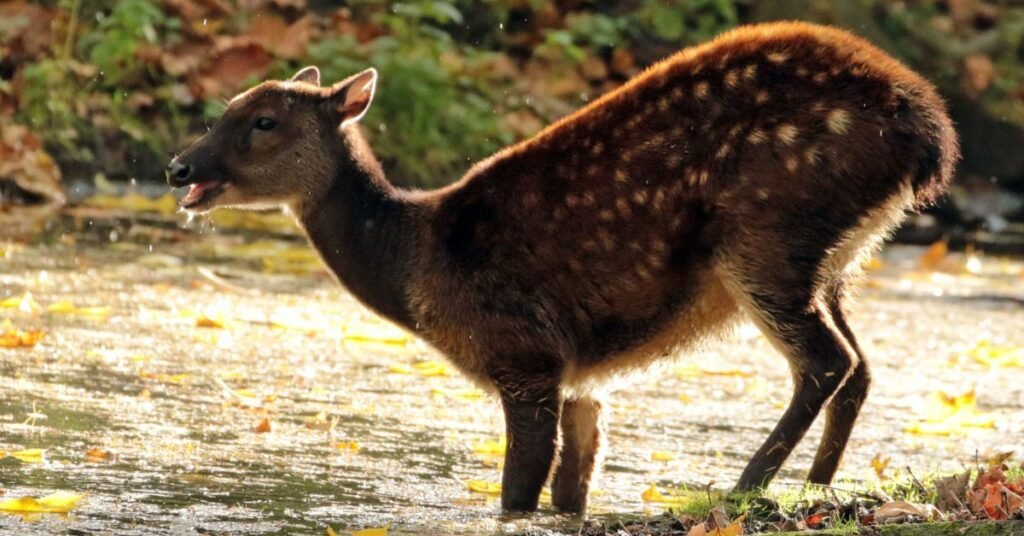
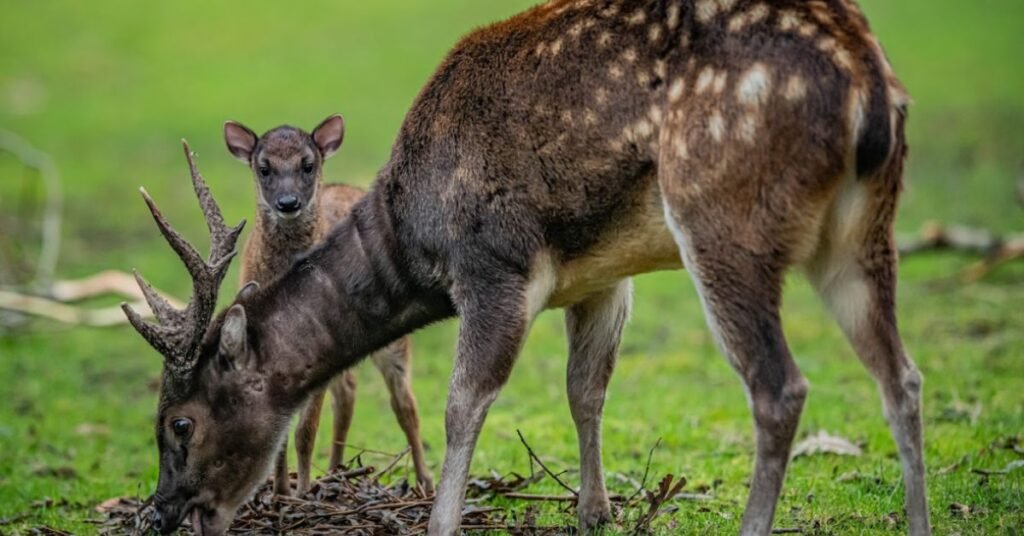
| Philippine Spotted Deer | Visayas | Endangered | Beautiful spotted coat |
| Visayan Warty Pig | Panay & Negros | Critically Endangered | Warts on face, spiky mane |
| Calamian Deer | Calamian Islands | Endangered | Island-specialist deer |
| Philippine Colugo (Flying Lemur) | Nationwide | Least Concern | Glides between trees |
| Long-Tailed Macaque | Nationwide | Near Threatened | The Philippines’ most widespread primate |
| Philippine Tree Shrew | Luzon | Least Concern | Tiny, insect-eating mammal |
| Palawan Stink Badger | Palawan | Least Concern | Releases a strong odor as a defense |
| Philippine Brown Deer | Luzon & Mindanao | Vulnerable | Common forest deer |
The Philippine colugo, also called the flying lemur, deserves a special mention. It is not truly a bat or a lemur. It glides through the air using a thin membrane called a patagium that stretches from its neck to its tail. It can glide more than 100 meters between trees. The colugo is the closest living relative to primates. This makes it a fascinating chapter in the story of mammal evolution.
Habitat: Where Philippine Mammals Live
Philippine mammals live in a wide range of habitats. The country’s geography creates enormous diversity. Here is a look at the main habitat types and the mammals that depend on them:
Tropical Rainforests are the richest habitats in the Philippines. Most endemic mammals live here. They provide food, shelter, and breeding grounds for species like tarsiers, cloud rats, flying foxes, and tree shrews. Luzon’s Sierra Madre mountain range holds one of the largest remaining lowland forests in the country.
Montane and Cloud Forests sit higher up in the mountains. These cool, misty forests are home to cloud rats, mountain shrews, and several endemic bat species. These habitats are especially vulnerable to climate change and agricultural expansion.
Coastal and Marine Habitats support dugongs and dolphins. The Philippines’ seagrass meadows are among the most extensive in Southeast Asia. They provide vital feeding grounds for marine mammals. Spinner dolphins are also commonly seen in Philippine coastal waters.
Grasslands and Open Areas on Mindoro support the tamaraw. These open spaces, mixed with patches of forest, allow the tamaraw to graze and move freely within protected areas like Mounts Iglit-Baco National Park.
Major Threats Facing the Philippines Mammals
Despite its incredible biodiversity, the Philippines faces serious threats to its wildlife. Here are the main challenges:
Deforestation is the biggest threat. The Philippines once had dense forest covering 70% of its land. Today, forest cover has dropped to around 20%. Less than 10% of the original lowland forest remains. Many mammal species depend entirely on these forests.
Illegal Hunting and Poaching push many species toward extinction. Mammals like the pangolin, bats, wild pigs, and deer are targeted for bushmeat, medicine, and the pet trade. The illegal wildlife trade in the Philippines is estimated to be worth around $1 billion annually.
Habitat Fragmentation breaks up forests into small patches. Species that need large territories — like flying foxes and the tamaraw — cannot move freely. Isolated populations are more vulnerable to disease and genetic problems.
Climate Change threatens coastal habitats and mountain forests. Rising sea levels damage seagrass beds. Changes in rainfall and temperature affect food availability for many species.
Read for more info: https://wildtrailsapp.com/how-many-birds-are-in-the-world/
Conservation Efforts for Philippine Mammals
The Philippine government and various organizations are working hard to protect the country’s mammals. Here are key conservation efforts:
The Department of Environment and Natural Resources (DENR) oversees wildlife protection. It manages protected areas and enforces wildlife laws. In 2024, the DENR launched the “Save From Extinction” campaign together with the SM Group, WWF, and the Zoological Society of London. This campaign targets six critically endangered species, including the tamaraw, dugong, and pangolin.
The Philippine Mammal Project, based at the Field Museum of Chicago, has documented Philippine mammal diversity since 1988. This multi-institutional team has discovered dozens of new species and created the most complete database of Philippine mammals in existence.
Wildlife sanctuaries like the Philippine Tarsier Foundation in Bohol protect sensitive species from harmful tourism. They give animals safe space to live and breed naturally.
Republic Act 9147, the Wildlife Resources Conservation and Protection Act, makes it illegal to hunt, capture, or trade most native wildlife in the Philippines. Strengthening enforcement of this law is critical to the future of Philippine mammals.
Why Philippine Mammals Matter to the Ecosystem
Philippine mammals do not just represent beautiful wildlife. They perform essential roles in maintaining healthy ecosystems.
Bats pollinate flowers and disperse seeds across vast distances. Without them, many tree species could not reproduce. Forests would shrink. Bats are especially critical in the Philippines, where they are the most species-rich mammal group.
Dugongs keep seagrass meadows healthy. As they graze, they create pathways through seagrass that allow oxygen to reach the roots. Healthy seagrass beds support countless fish, crabs, and other marine life.
Carnivores like civets and palm civets control rodent populations. They also disperse seeds through their droppings. The common palm civet eats fruit and spreads seeds widely across its range, helping forests regenerate.
Large herbivores like the tamaraw and deer shape grassland and forest ecosystems. Their grazing maintains plant diversity. They also provide food for predators, keeping the food chain balanced.
The loss of any one species can set off a chain reaction that damages entire ecosystems. Protecting the Philippines mammals means protecting the natural systems on which all life depends.
Conclusion
The Philippines mammals represent one of the greatest concentrations of biodiversity anywhere on Earth. From the wide-eyed tarsier to the mighty tamaraw, from the enormous golden-crowned flying fox to the gentle dugong, the Philippines holds a treasure chest of unique wildlife. Many of these animals exist nowhere else in the world.
But this treasure is under threat. Deforestation, poaching, and climate change push many species toward extinction every day. The good news is that conservation efforts are real, funded, and expanding. The government, local communities, international organizations, and ordinary citizens all play a role.
Every action counts. Supporting responsible wildlife tourism, avoiding illegal wildlife products, and raising awareness about the Philippines mammals can make a real difference. The Philippines has the chance to protect its natural heritage. Now is the time to act.
Frequently Asked Questions (FAQs)
Q1. How many mammal species live in the Philippines?
The Philippines is home to approximately 225 native terrestrial mammal species. Of these, more than 130 are endemic, meaning they exist only in the Philippines. Among non-flying land mammals, about 91% are found nowhere else on Earth. This makes the Philippines one of the most mammal-diverse countries on the planet.
Q2. What is the most famous mammal in the Philippines?
The Philippine tarsier is widely considered the most famous Philippine mammal. Its enormous eyes, tiny size, and incredible leaping ability make it a beloved symbol of Philippine wildlife. The tamaraw, a critically endangered dwarf buffalo found only on Mindoro, is also one of the country’s most iconic mammals.
Q3. Are any Philippine mammals currently extinct?
Yes. Several subspecies have been lost, including the Panay golden-crowned flying fox (Acerodon lucifer), which is now considered extinct. Many more Philippine mammals face a serious extinction risk. The Philippine government has identified six species — the tamaraw, dugong, pangolin, Philippine eagle, Philippine cockatoo, and marine turtles — as priority species for urgent conservation action.
Q4. Where can I see wild mammals in the Philippines?
You can see Philippine tarsiers at responsible sanctuaries in Bohol. The tamaraw lives in Mount Iglit-Baco National Park on Mindoro. Golden-crowned flying foxes roost in large colonies near Subic Bay in Luzon. Dugongs can be spotted in coastal areas around Palawan. Always choose ethical, conservation-focused wildlife experiences.
Q5. What is the biggest threat to the Philippines mammals?
Deforestation is the single biggest threat. The Philippines has lost most of its original forest cover. Illegal hunting and the wildlife trade are also major threats, especially for pangolins, bats, and deer. Climate change and coastal development increasingly threaten marine mammals like the dugong. Addressing these threats requires strong law enforcement, habitat protection, and community involvement.