Introduction
Have you ever looked up at the sky and wondered how many birds share our planet? Birds are everywhere. You see them in your garden, near rivers, on mountaintops, and even in the middle of busy cities. They sing, fly, migrate thousands of miles, and play a huge role in keeping our ecosystems healthy. But just how many birds are in the world?
The answer is truly mind-blowing. Scientists estimate there are around 50 billion wild birds in the world today. That works out to roughly six birds for every single human being on Earth. When you add domesticated birds like chickens and ducks, that number jumps even higher — to around 85 billion birds in total.
In this article, we break down everything you need to know about how many birds are in the world, which species are most common, where most birds live, and why their numbers are changing.
How Many Birds Are in the World?
The most widely accepted scientific estimate tells us there are approximately 50 billion wild birds on Earth. This number comes from a landmark study published in 2021 in the Proceedings of the National Academy of Sciences. Researchers used data from the global birdwatching database eBird and combined it with other bird surveys from around the world.
When you include domesticated birds, the total rises sharply. Scientists estimate there are around 85 billion birds in the world altogether. Of those 85 billion, roughly 35 billion are domesticated birds. That is a staggering number of feathered creatures sharing the planet with us.
It is important to understand that scientists cannot count every single bird one by one. Estimating the global population of birds is not as simple as counting individual animals — especially for animals that fly, migrate across continents, and live in places that are hard for humans to access. Instead, researchers use satellite tracking, citizen science data, and ecological modeling to arrive at their best estimates.
Keep in mind that these are estimates. Scientists provided a range for global bird populations from 10 billion to 428 billion. The 50 billion figure sits comfortably in the middle and is considered the most reliable estimate we have right now.
How Many Bird Species Are in the World?

The total number of bird species in the world is just as fascinating as the total population count. There are approximately 10,800 to 11,000 bird species worldwide, according to the latest ornithological research. However, the exact number depends on which scientific organization you consult.
The most widely used and authoritative global checklist is the Clements Checklist of Birds of the World, maintained by Cornell University’s Cornell Lab of Ornithology. As of the most recent updates, this list recognizes approximately 11,017 species.
Different organizations use slightly different methods to count and classify birds. Here is a quick comparison:
| Organization | Recognized Bird Species |
| Cornell Lab of Ornithology (Clements) | ~11,017 |
| International Ornithological Congress (IOC) | ~10,900–11,000 |
| BirdLife International | ~11,000 |
| IUCN (International Union for Conservation of Nature) | Over 11,000 |
The reason these numbers differ slightly is that bird classification is always changing. Sometimes scientists determine that two populations of birds previously believed to be one species are actually two different species, and then the total number of known species grows by one. This is called a “split.” The reverse also happens — two species get “lumped” together.
Scientists also continue to discover new species. Scientists estimate that new bird species are discovered at a rate of 5–10 per year, with many finds occurring in remote tropical regions, particularly in South America.
Wild Birds vs. Domesticated Birds: What Is the Difference?
When people ask how many birds are in the world, it is important to separate wild birds from domesticated ones. The numbers look very different.
Wild Birds
The total number of wild birds — every penguin, parrot, heron, woodpecker, ibis, albatross, and every other bird in the world — is estimated at about 50 billion individuals. That number was most recently estimated as part of a paper published in 2021 in the Proceedings of the National Academy of Sciences.
Domesticated Birds
The vast majority of domestic birds on this planet — some 33 billion, according to the Food and Agriculture Organization (FAO) of the United Nations — are chickens. Chickens alone outnumber all wild birds combined in raw numbers, mostly because of large-scale farming for food production.
The FAO estimates that there are nearly 2 billion domestic birds of other species, including ducks, turkeys, guineafowl, and geese.
Here is a simple breakdown of global bird populations:
| Category | Estimated Number |
| Wild birds | ~50 billion |
| Domesticated chickens | ~33 billion |
| Other domestic birds (ducks, geese, etc.) | ~2 billion |
| Total birds (wild + domestic) | ~85 billion |
What Are the Most Common Birds in the World?
Not all bird species have the same population size. Some birds number in the billions, while others teeter on the edge of extinction. Let’s look at the most common birds in the world.
The Domestic Chicken — The Most Numerous Bird on Earth
The domestic chicken is the most commonly found bird in the world, with over 20 billion estimated to exist globally. This enormous number is largely due to the global food industry, where chickens are raised for meat and eggs on a massive scale.
Chickens have been part of human civilization for thousands of years. Today’s poultry chickens are the descendants of wild Red Junglefowl domesticated in Asia as many as 9,500 years ago. From a wild forest bird to the world’s most numerous bird — that is quite a journey.
The Red-Billed Quelea — The Most Numerous Wild Bird
The Red-billed Quelea is estimated to number 1.5 billion, making it the most abundant of all wild birds. This small sparrow-sized bird lives in sub-Saharan Africa and is famous for flying in flocks so large they can look like storm clouds from a distance.
The red-billed quelea is native to sub-Saharan Africa and is found in tropical and subtropical areas with a semi-arid climate, although it avoids forests, deserts, and colder areas such as those at high altitudes. Because these birds eat crops like grain and rice, they are often considered agricultural pests in Africa.
Other Birds with Billion-Plus Populations
The world estimates for the most common wild birds are: House Sparrow at 1.6 billion, European Starling at 1.3 billion, Ring-billed Gull at 1.2 billion, and Barn Swallow at 1.1 billion.
| Bird Species | Estimated Population |
| Domestic Chicken | ~20–24 billion |
| Red-billed Quelea | ~1.5 billion |
| House Sparrow | ~1.6 billion |
| European Starling | ~1.3 billion |
| Ring-billed Gull | ~1.2 billion |
| Barn Swallow | ~1.1 billion |
At the other end of the scale, about 12% of known bird species each have fewer than 5,000 individuals. These rare birds face serious threats and need urgent protection.
Where Do the Most Birds in the World Live?
Birds are found on every continent, including Antarctica. But bird populations are not spread equally across the globe. Some regions are hotspots that support far more species and individuals than others.
South America — The Bird Diversity Capital
South America hosts more bird species than any other region. Colombia, with an astonishing 1,917 species, leads the world, followed closely by Peru at 1,892, Brazil at 1,864, Ecuador at 1,684, and Bolivia at 1,446.
The Amazon rainforest is the driving force behind this incredible diversity. The Amazon Basin, spanning countries like Brazil, Peru, Colombia, and Venezuela, is home to over 1,500 bird species, making it the richest bird habitat on the planet. Species such as toucans, macaws, parrots, and hummingbirds thrive in this biodiverse ecosystem.
Africa — Home to the Most Abundant Wild Bird
Africa holds its own impressive records. Sub-Saharan Africa is home to the largest population of a single bird species — the Red-billed Quelea — with estimates of over 1.5 billion individuals. These birds form flocks so large they can darken the sky.
Asia — A Continent of Huge Bird Populations
Asia is also a major center for bird diversity and numbers. India alone is home to more than 1,300 bird species. Indonesia, with its thousands of islands, supports an incredible range of species, including the famous birds-of-paradise.
Top Bird-Rich Countries at a Glance
| Country | Number of Bird Species |
| Colombia | ~1,917 |
| Peru | ~1,892 |
| Brazil | ~1,864 |
| Indonesia | ~1,791 |
| Ecuador | ~1,684 |
| Bolivia | ~1,446 |
Are Bird Populations in the World Declining?
This is one of the most serious questions in conservation today. The sad reality is that bird populations worldwide are falling. Despite there being billions of birds in the world, many species are losing ground fast.
Overwhelming scientific evidence indicates that global bird populations are in significant decline. The decline is driven by habitat loss and degradation, including deforestation, urbanization, and agricultural intensification; climate change, causing shifting ranges and disrupted migration timing; direct exploitation through unsustainable hunting and trapping; and invasive species, causing predation by introduced mammals such as rats and cats.
Since the 1500s, birds have been declining both in terms of species numbers — by about 500 species — and numbers of individuals — by about 20–25%. This is a dramatic drop driven almost entirely by human activities.
The situation is especially urgent for some species. The world’s rarest bird species include the Spix’s Macaw, which is extinct in the wild, and the Kakapo of New Zealand, with only around 250 individuals remaining.
However, conservation efforts do work. The California condor, once reduced to just 27 individuals in 1987, now numbers over 500, thanks to captive breeding and lead ammunition bans. The Mauritius kestrel, once the rarest bird in the world with only four wild individuals, has rebounded to over 400 through intensive management.
Read for more info: https://wildtrailsapp.com/good-names-for-turtles/
Interesting Facts About Birds in the World
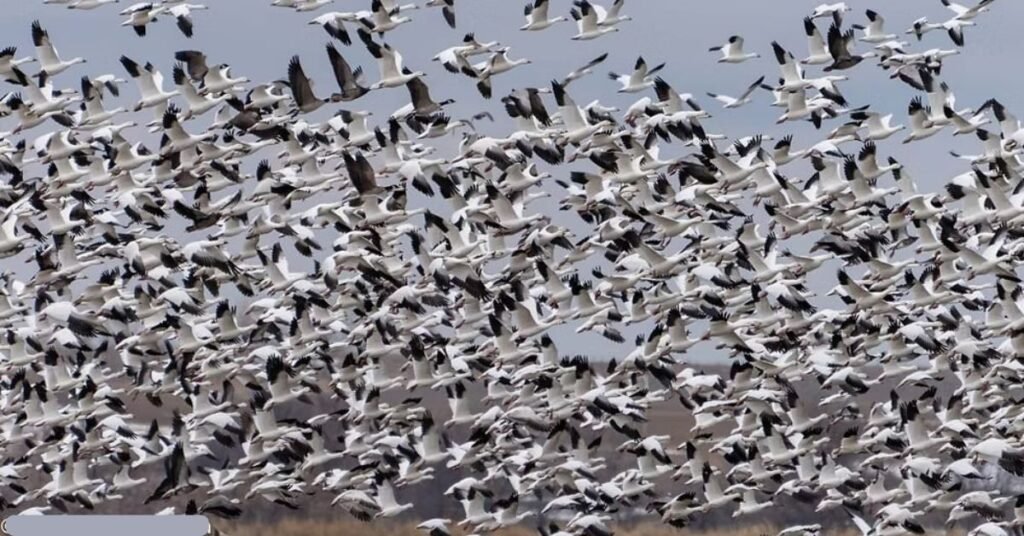
Birds are endlessly fascinating creatures. Here are some remarkable facts that put the world’s bird population into perspective.
The world’s largest bird is the Common Ostrich. It can weigh over 300 pounds, stand up to 9 feet tall, and is fierce enough to fight off lions.
The Peregrine Falcon flies faster than any other bird, reaching 200 miles per hour while diving from the sky to ambush prey.
The longest migration of any bird belongs to the Arctic Tern, which flies nearly 60,000 miles every year between the North Atlantic and the Antarctic oceans.
The Bee Hummingbird, the smallest bird in the world, can hover in place due to its rapid wingbeats.
The loudest bird on Earth is believed to be the White Bellbird of South America. Its calls have been recorded as reaching 125 decibels — the same as a jet plane during takeoff.
These facts remind us that birds are not just numerous — they are also some of the most extraordinary animals on our planet.
How Can You Help Protect Birds in the World?
Every person can make a difference in protecting the world’s bird populations. You do not need to be a scientist to take meaningful action.
Here are practical steps you can take: Participate in citizen science projects like eBird or iNaturalist to contribute real data used in research. Make windows safer by applying decals or UV-reflective film to prevent collisions. Keep cats indoors, since domestic cats kill billions of birds each year.
Plant native vegetation, since native plants support native insects, which feed many bird species. Reduce plastic use, as plastics pollute oceans and are ingested by seabirds, often fatally.
Even simple actions at home — like putting up a bird feeder, providing a water source, or planting flowers that attract insects — help support local bird populations.
Conclusion
So, how many birds are in the world? Scientists estimate there are about 50 billion wild birds and roughly 85 billion birds in total when you include domesticated species. These birds belong to over 11,000 recognized species spread across every continent and ecosystem on Earth.
Birds are incredibly diverse, from the tiny Bee Hummingbird to the towering Ostrich, from the common House Sparrow to the critically endangered Kakapo. They play vital roles in pollination, pest control, seed dispersal, and maintaining the balance of ecosystems we all depend on.
However, bird populations worldwide are declining, and many species face serious threats from habitat loss, climate change, and human activity. The good news is that conservation works — species once on the brink of extinction have come back from the edge. Each of us has a role to play in protecting these remarkable creatures for generations to come.
FAQs About How Many Birds Are in the World
Q1: How many birds are in the world in 2025?
Scientists estimate there are approximately 50 billion wild birds in the world in 2025. When you add domesticated birds like chickens and ducks, the total rises to about 85 billion. These are estimates based on large-scale studies using citizen science data, field surveys, and ecological modeling.
Q2: How many bird species are there in the world?
There are approximately 10,800 to 11,000 recognized bird species in the world today, depending on which scientific authority you consult. The Cornell Lab of Ornithology recognizes around 11,017 species. This number changes each year slightly as scientists discover new species or reclassify existing ones.
Q3: What is the most common bird in the world?
The domestic chicken is the most numerous bird on Earth, with an estimated population of over 20 billion. Among wild birds, the Red-billed Quelea of sub-Saharan Africa holds the record, with around 1.5 billion individuals. The House Sparrow is the most widely distributed wild bird, found on every continent except Antarctica.
Q4: Are bird populations increasing or decreasing?
Overall, bird populations worldwide are decreasing. Since the 1500s, bird numbers have dropped by about 20–25%, driven by habitat loss, climate change, invasive species, and direct exploitation. About 12% of known bird species have populations of fewer than 5,000 individuals. However, targeted conservation efforts have successfully brought some species back from the brink of extinction.
Q5: Which country has the most bird species in the world?
Colombia has the most bird species of any country in the world, with over 1,917 recorded species. It is followed by Peru with around 1,892 species and Brazil with around 1,864 species. This incredible diversity is largely due to the vast and varied ecosystems found in South America, especially the Amazon rainforest.