Introduction
Have you ever wondered what the loudest animal on Earth sounds like? You might think it’s a roaring lion or a screaming eagle. But the truth is far more surprising. Some of the loudest creatures on the planet live deep in the ocean.
Others are no bigger than your thumb. Nature is full of jaw-dropping sounds, and the animals that make them use noise to survive, hunt, and communicate. In this article, we take you on a loud journey through the animal kingdom. Get ready to meet the noisiest creatures on Earth and learn why they make such incredible sounds.
What Makes an Animal “The Loudest”?
Before we crown the loudest animal on Earth, we need to understand how we measure sound. Scientists use a unit called the decibel (dB) to measure sound intensity. The decibel scale is logarithmic.
This means that every 10 decibels is ten times louder than the previous level. A normal human conversation sits around 50 decibels. A jet engine roars at about 150 decibels. The human eardrum can rupture at around 200 decibels.
Sound also travels differently underwater than it does in the air. Water is denser than air, so sound moves faster and farther through it. This is why many of the loudest animals on Earth live in the ocean.
Their sounds, though incredibly powerful underwater, would translate to lower decibel levels if heard in open air. Scientists also note that volume depends on the distance from the source. The closer you are, the louder the sound. Keeping all this in mind, let’s meet the loudest animals on our planet.
The Loudest Animal on Earth: The Sperm Whale
The title of loudest animal on Earth belongs to the sperm whale. This giant of the deep ocean produces clicks that can reach an astonishing 230 decibels. To put that in context, a jet engine at close range produces about 150 decibels. The sperm whale’s sound is not just a little louder — it is exponentially more powerful.
Sperm whales use these clicks primarily for echolocation. The deep ocean is almost completely dark. To navigate and find prey like giant squid, the sperm whale fires loud sound pulses and listens for the echoes that bounce back. This is like a natural sonar system. The whale uses the echoes to map its surroundings with remarkable precision.
These whales uniquely produce sound. They force air through a structure in their nose called the phonic lips. The sound travels through a large organ filled with a waxy substance called spermaceti. This organ focuses and amplifies the sound before it shoots out into the ocean. The result is a click so powerful it can be detected from 100 miles away.
The Pistol Shrimp: Tiny But Terrifyingly Loud
You might not expect a small shrimp to feature on a list of the loudest animals on Earth, but the pistol shrimp earns its place here without question. This tiny creature, just 4 to 5 centimeters long, can produce a sound that exceeds 200 decibels.
The pistol shrimp snaps its large claw shut with incredible speed. This creates a fast-moving bubble called a cavitation bubble. When this bubble collapses, it produces a shockwave and a popping sound that is among the loudest in the animal kingdom.
The snap also briefly reaches temperatures as hot as the surface of the sun. The shrimp uses this powerful snapping ability to stun or kill small prey. It is one of the most fascinating hunting tools in all of nature.
The tiger pistol shrimp is one of the loudest varieties, with sounds recorded at around 218 decibels. Despite living underwater, this tiny animal punches far above its weight when it comes to noise.
The Blue Whale: Loud Enough to Cross an Ocean
The blue whale is the largest animal on Earth, and it is also one of the loudest animals on Earth. Its deep, rumbling calls can reach up to 188 to 191 decibels. These sounds travel through the ocean at incredible distances — in fact, a blue whale’s call can be heard from up to 1,000 miles (1,600 kilometers) away.
Blue whales produce sounds described as pulses, grunts, groans, and moans. They use these vocalizations to communicate with other blue whales across vast stretches of ocean. This is especially useful because blue whales are largely solitary animals. Their loud voices act like long-distance phone calls.
Interestingly, blue whales have no vocal cords. Scientists believe their larynx and nasal sacs produce sound instead. Most of their calls are too low in frequency for humans to hear. Ocean noise pollution from ships and sonar systems is a growing threat to blue whales. When human-made noise fills the ocean, these giants struggle to communicate, navigate, and find mates.
Top 10 Loudest Animals on Earth
Here is a quick comparison of the loudest animals on Earth and the sounds they make:
| Animal | Sound Level (Decibels) | Sound Type | Habitat |
| Sperm Whale | Up to 230 dB | Echolocation clicks | Deep ocean |
| Tiger Pistol Shrimp | Up to 218 dB | Claw snap | Coastal waters |
| Blue Whale | Up to 191 dB | Low-frequency calls | Open ocean |
| Fin Whale | Up to 189 dB | Low-frequency vocalizations | Open ocean |
| North Pacific Right Whale | Up to 182 dB | Loud calls | Ocean |
| Howler Monkey | Up to 140 dB | Howl/scream | Rainforests |
| Greater Bulldog Bat | Up to 140 dB | Ultrasonic chirps | Central/South America |
| White Bellbird | Up to 125 dB | Mating call | Amazon rainforest |
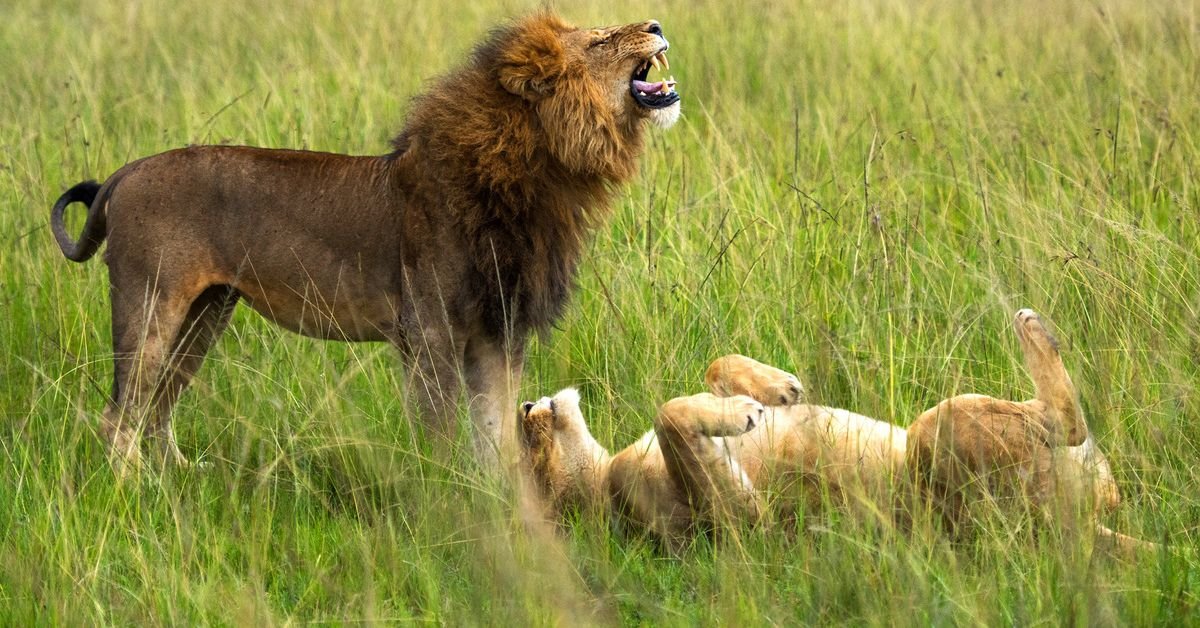
| African Lion | Up to 114 dB | Roar | African savanna |
| Common Coquí Frog | Up to 90 dB | Mating call | Puerto Rico, Hawaii |
The Howler Monkey: Loudest Land Animal
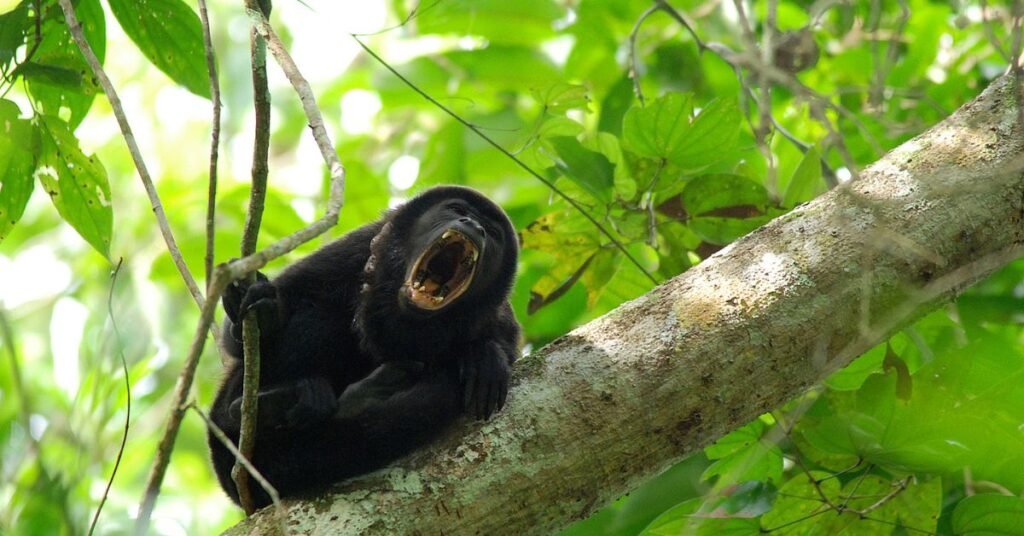
On land, the howler monkey takes the crown as one of the loudest animals on Earth. Its howl can reach 140 decibels and travel through dense rainforest for up to 3 miles (4.8 kilometers). These monkeys live in the forests of Central and South America, and their screams are a daily soundtrack for anyone nearby.
Male howler monkeys are especially loud. They have an enlarged hyoid bone in their throat that acts like a natural amplifier. The louder the male, the more attractive he is to females. But surprisingly, scientists have found an interesting trade-off: males with the loudest howls tend to have smaller testes.
The energy the body puts into growing a large hyoid bone comes at a reproductive cost. Howler monkeys use their loud voices to claim territory and warn other groups to stay away. Their morning chorus is one of the most powerful sounds in any jungle.
Read for more info: https://wildtrailsapp.com/south-africa-animals/
The White Bellbird: Loudest Bird on Earth
Among birds, the white bellbird holds the record as the loudest animal on Earth in the avian world. Found in the mountains of northern Brazil, the male white bellbird produces a call that reaches 125 decibels. That is roughly as loud as a rock concert.
What makes this even more impressive is the bird’s small size. The white bellbird directs its deafening call directly at female birds during mating displays. The male often swings toward the female while calling, blasting her with maximum sound. Scientists believe the extreme volume is a result of sexual selection — females prefer males with louder calls, so over generations, the calls have become louder and louder.
The screaming piha, another bird from the Amazon, comes in second place among loud birds, reaching peaks of around 116 decibels. Both birds are remarkable examples of how natural selection can push animals toward extreme traits.
Why Do Animals Make Such Loud Sounds?
There is always a reason behind an animal’s noise. The loudest animals on Earth use their sounds for several important purposes. Understanding why they are so loud helps us appreciate how sound is a vital survival tool in the animal kingdom.
Communication is the most common reason. Many animals call to each other across long distances. The blue whale uses sound to find a mate hundreds of miles away. The howler monkey uses its roar to keep rival groups at a safe distance. Echolocation is another key reason, used by whales, dolphins, and bats to “see” in the dark using sound waves.
Hunting is also a factor — the pistol shrimp uses its snap to stun and kill prey. Mating drives many birds and frogs to produce their loudest calls during breeding seasons, as loudness signals strength and good health to potential partners. Territory defense motivates animals like lions and howler monkeys to roar at full volume when rivals approach.
Surprising Small Creatures That Are Very Loud
Not every loudest animal on Earth is a giant. Some small creatures produce sounds that are shocking for their size. The water boatman, a tiny insect smaller than a pea, can produce sounds up to 99 decibels using a technique called stridulation, which involves rubbing its reproductive organ against its abdomen. This makes it the loudest animal relative to its body size in the world.
The common coquí frog from Puerto Rico produces calls up to 90 decibels every night. In Hawaii, where it is an invasive species, the frog population can reach 55,000 per hectare, creating a wall of noise so intense it is considered noise pollution.
The male cicada is another surprisingly loud insect, vibrating a drum-like membrane on its body to produce sounds up to 120 decibels. The greater bulldog bat emits chirps up to 140 decibels while hunting for fish over water at night, making it one of the loudest bats on Earth.
How Loud Sounds Affect Marine Life
The loudest animals on Earth — especially ocean dwellers — face growing challenges from human activity. Ocean noise pollution has become a serious problem. Ships, submarines, and industrial drilling fill the ocean with human-made sound. This interferes with how whales and dolphins communicate, navigate, and find food.
The blue whale’s call shares the same frequency range as ship engines. When ships flood the ocean with noise, blue whales may struggle to hear each other’s songs. This can affect their ability to find mates and coordinate migration. Similarly, military sonar has been linked to whale strandings.
The sudden, intense sound can disorient whales and cause them to surface too quickly, leading to injury or death. Scientists and conservation groups are pushing for quieter shipping technologies and sound exclusion zones to protect these magnificent loudest animals on Earth and preserve the natural soundscape of our oceans.
Conclusion
The natural world is a place of incredible sounds. The loudest animal on Earth, the sperm whale, produces clicks at 230 decibels — a sound more powerful than any human-made noise most of us will ever encounter. From the thunderous call of the blue whale to the surprising snap of the tiny pistol shrimp, nature has evolved loudness as a critical survival tool.
These animals use sound to hunt, communicate, attract mates, and defend territory. Their remarkable voices remind us of how diverse and extraordinary life on Earth truly is. As human noise continues to grow, protecting the natural soundscape of our planet becomes ever more important — not just for us, but for the loudest and most vocal creatures that share this world with us.
Frequently Asked Questions (FAQs)
Q1. What is the loudest animal on Earth?
The sperm whale is widely regarded as the loudest animal on Earth. Its echolocation clicks can reach up to 230 decibels, making it more powerful than a jet engine. Scientists consider it the highest recorded biological sound source on the planet.
Q2. Is the blue whale louder than the sperm whale?
No. The blue whale’s calls reach up to about 188 to 191 decibels, which is incredibly loud, but the sperm whale’s clicks surpass this at up to 230 decibels. However, the blue whale’s call travels much farther through the ocean — up to 1,000 miles away.
Q3. What is the loudest land animal on Earth?
The howler monkey is considered the loudest land animal on Earth. Its howl can reach 140 decibels and carry for up to 3 miles through dense rainforest. The greater bulldog bat and some birds like the white bellbird are close competitors.
Q4. Can a sperm whale’s click hurt a human?
Yes, in theory. The sperm whale’s clicks are so powerful that at close range underwater, they could rupture a diver’s eardrums or cause physical harm. However, the risk is low in practice because sperm whales echolocate at great depths, and humans rarely encounter them that close.
Q5. What is the loudest insect on Earth?
The cicada is one of the loudest insects on Earth, producing sounds up to 120 decibels by vibrating a drum-like organ called a tymbal on its abdomen. The water boatman, though quieter at 99 decibels, holds the record as the loudest animal relative to its body size.