What Are Brumbies?
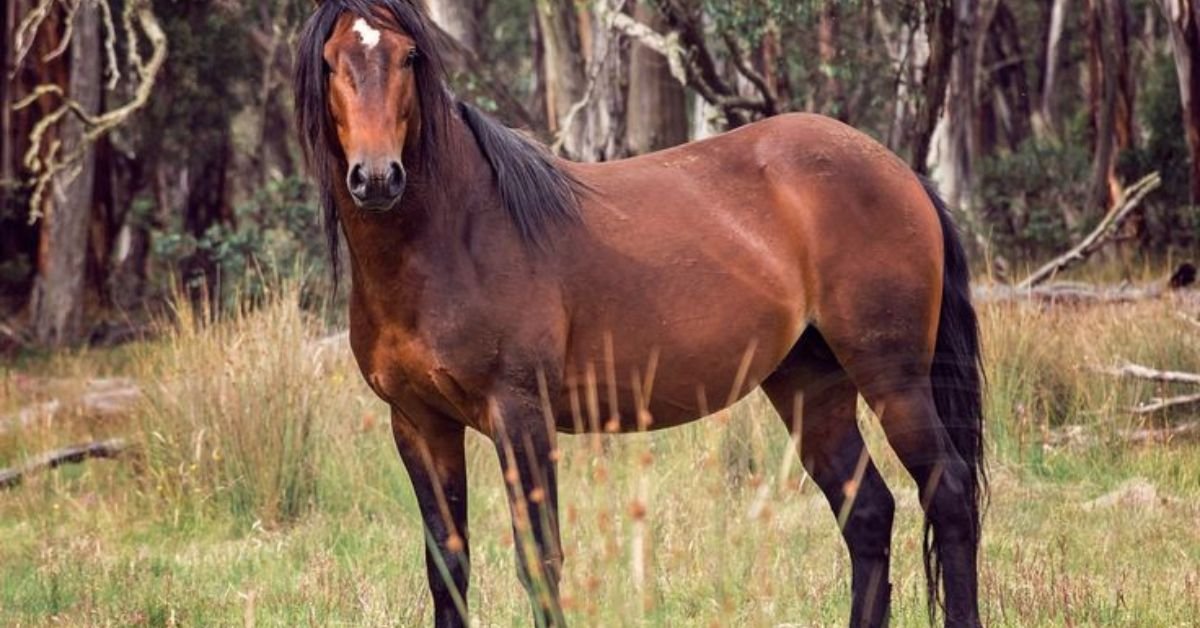
Brumbies are free-roaming feral horses found across Australia. They are one of the most iconic symbols of the Australian wilderness. These horses live in the wild without any human care or control. They roam freely across vast stretches of land, from the rugged Australian Alps to the dry outback of the Northern Territory.
People call a group of Brumbies a “mob” or “band,” but Brumbies do not belong to a specific breed. Instead, they are a mix of many different horse breeds that have adapted to Australia’s harsh environment over hundreds of years. Brumbies display strength, intelligence, and a remarkable ability to survive in tough conditions.
Today, Australia is home to the largest population of feral horses in the world. An estimated 400,000 or more Brumbies horses are living across the country. They have no natural predators, which allows their population to grow rapidly. Their story is one of survival, history, and deep cultural meaning for the people of Australia.
The History of Brumbies Horses
The history of Brumbies horses begins in 1788, when the British First Fleet arrived in Australia. These ships carried the first horses ever to set foot on Australian soil. The horses came from England, South Africa, and India. They included Thoroughbreds, Arabian horses, draft horses, and various pony breeds.
At first, settlers used these horses for farm work, exploration, and transport. The horses helped open up Australia’s vast pastoral land. Explorers relied on them to travel long distances across unknown terrain. Horses also played a key role in the growth of Australia’s wool and cattle industries.
As time passed, many horses escaped into the wild, or people released them there. Low-quality fences and infrequent musters meant horses wandered off easily. When machinery replaced horses on farms, many owners simply set the animals free. These escaped and abandoned horses bred in the wild, forming large feral herds. Only the fittest horses survived Australia’s harsh climate. Over time, these horses became the Brumbies we know today.
Where Does the Name “Brumby” Come From?
The origin of the name “Brumby” is a topic of great debate. There are two main theories about where this word comes from.
The most popular theory links the name to Sergeant James Brumby, a soldier and farrier who arrived in Australia in 1791. When James Brumby left for Tasmania in 1804, he left some of his horses behind in New South Wales. When locals asked who owned the horses roaming the land, the reply was, “They are Brumby’s.” Over time, this became the word for any wild horse in Australia.
The second theory connects the word to an Aboriginal language. The Pitjara Indigenous Australians of southern Queensland used the word baroomby, which means “wild.” People believe this word spread across the region around 1864. Both theories have strong supporters, and historians still debate which one is correct.
The earliest known use of the word “Brumby” in print dates back to 1871, in a newspaper from Walgett, New South Wales. By the 1880s, people across Queensland and New South Wales widely used the term to describe wild horses.
Physical Features of Brumbies Horses
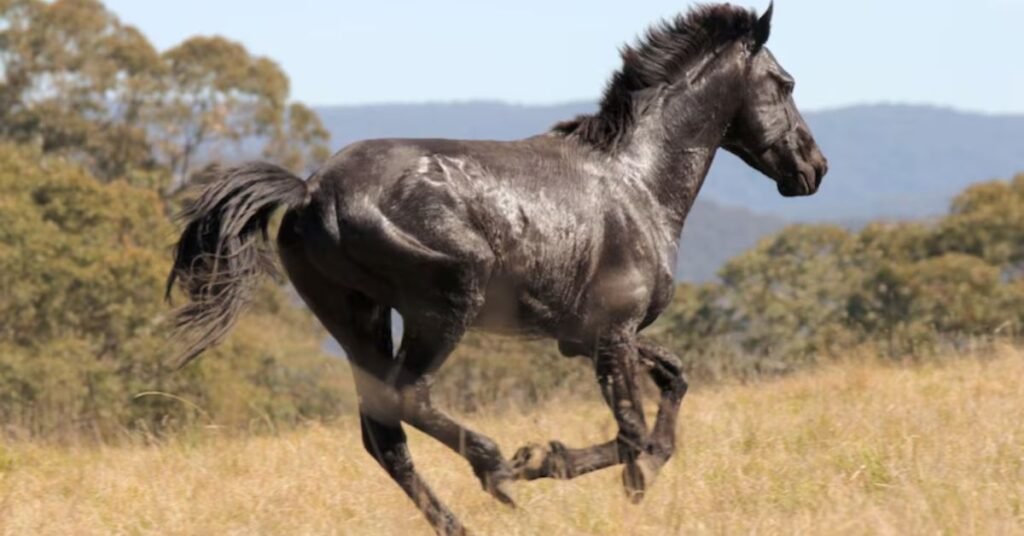
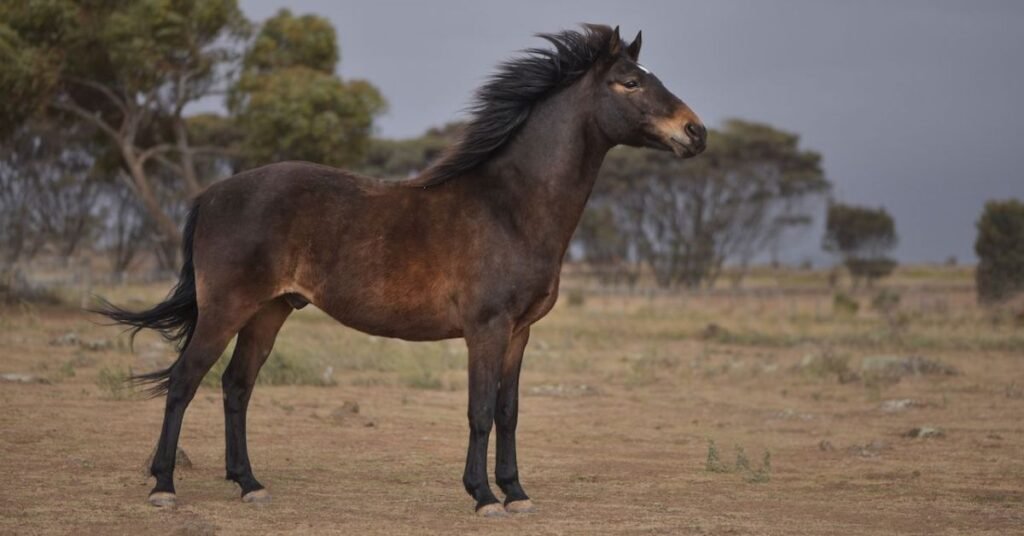
Brumbies horses do not follow a single standard look. Because they come from many different breeds, their appearance varies widely. However, they do share some common physical traits that make them recognizable.
| Physical Feature | Details |
| Height | 13.2 to 15 hands (about 54–60 inches) |
| Weight | 900 to 1,000 pounds (400–450 kg) |
| Body Type | Muscular, compact, and sturdy |
| Coat Colors | Bay, brown, chestnut, black, grey, pinto, spotted |
| Head | Large, elongated with a thick neck |
| Legs | Long and strong, well-suited to rough terrain |
| Lifespan | 20 to 30 years |
Brumbies’ horses have hard, tough hooves that are ideal for rocky and uneven ground. Their bodies support endurance rather than speed. They can travel long distances in search of food and water. Their strong legs and sure-footedness allow them to move across steep mountains and dry plains with ease.
Where Do Brumbies Horses Live?
Brumbies are found in many parts of Australia. They live in a wide range of environments, from hot deserts to cold mountain regions. Their ability to adapt to different climates is one of their most impressive traits.
The Northern Territory has the largest population of Brumbies horses in the country. Queensland has the second-largest population. In south-eastern Australia, Brumbies are famous for living in the Australian Alps. Key locations include:
- Kosciuszko National Park in New South Wales
- Alpine National Park in Victoria
- Barrington Tops National Park in New South Wales
- Carnarvon National Park in Queensland
In the alpine regions, Brumbies horses move to higher ground in summer and return to lower, warmer areas in winter. They are highly adaptable animals. They can find food and water even in the most remote and difficult environments.
Diet and Feeding Habits of Brumbies Horses
Brumbies horses are herbivores, which means they only eat plants. In the wild, they spend a large part of their day grazing. They can spend up to 15 to 17 hours a day feeding. This is because the grasses and plants they eat are not very rich in nutrients, so they must eat a lot.
Their main food sources include:
- Pasture grasses — their preferred and most common food
- Leaves and bark — eaten when grass is scarce
- Seeds and grains — foraged across open land
- Soil and mineral rocks — rich in important minerals
Brumbies prefer to graze in the early morning and evening to avoid the heat of the midday sun. They visit water sources mainly at night. In times of drought, finding water becomes very difficult and can cause large numbers of Brumbies to die.
When Brumbies are captured and rehomed, their diet changes. Owners feed them good-quality hay, low-sugar grains, and mineral supplements. Clean, fresh water is essential at all times. Owners must be careful not to give them rich feeds suddenly, as this can cause digestive problems like colic or laminitis.
Temperament and Behavior of Brumbies Horses
Brumbies are intelligent, curious, and independent animals. They have strong survival instincts developed over generations of living in the wild. In the wild, they live in herds with a clear social structure. A dominant stallion usually leads the group and protects the herd from danger.
They are alert animals with excellent eyesight and hearing. This helps them detect predators and threats from a distance. Because they have no natural predators in Australia, they are generally not as fearful as wild horses in other parts of the world.
When it comes to their temperament, Brumbies can range from calm and gentle to spirited and energetic. Much depends on their age, upbringing, and experiences with humans. Younger horses and those that have had positive contact with people are generally easier to handle.
Once tamed, Brumbies horses often become loyal, hardworking, and willing companions. Their intelligence makes them quick learners. Their endurance makes them excellent for long rides and demanding work. Many people who have tamed a Brumby describe the experience as deeply rewarding.
Taming and Training Brumbies Horses
Training a Brumby horse requires patience, consistency, and a calm approach. Because Brumbies have never lived with humans, they can be wary and easily startled. The key to training a Brumby is to build trust gradually. Rushing the process can cause setbacks and make the horse more fearful.
Many trainers use natural horsemanship methods. This approach focuses on understanding the horse’s natural behavior and communicating in a way the horse understands. Trainers use calm body language, gentle cues, and positive reinforcement to build a bond.
Some experts, like Australian trainer Joe Hughes, use a method called the 4BP technique. This approach allows trainers to tame a wild Brumby in just a few hours. With gentle cues, calm energy, and an averted gaze, the horse begins to trust the trainer. Within a day, many Brumbies can be ridden around a yard.
Common training steps include:
- Building presence — spending time near the horse without touching
- Desensitization — slowly introducing human contact
- Halter training — starting gently with rewards
- Ground work — teaching the horse to respond to commands
- Riding — introducing a saddle and rider gradually
Youth training camps also use wild Brumby horses to help troubled teenagers work with and learn from them. These programs help young people build confidence and self-esteem while giving the horses a second chance at life.
Brumbies Horses in Australian Culture
Brumbies hold a very special place in Australian culture and national identity. They appear in some of Australia’s most beloved literature, poetry, and films. Many people see them as a symbol of freedom, resilience, and the wild spirit of the Australian outback.
The famous Australian poet Banjo Paterson wrote about Brumbies horses in his iconic poem The Man from Snowy River. This poem describes the thrilling chase of a wild colt down a steep mountain. It captures the spirit of both the Brumby and the Australian bush. Paterson also wrote Brumby’s Run, dedicated entirely to these wild horses.
Australian author Elyne Mitchell wrote the beloved Silver Brumby book series, which follows the adventures of a beautiful silver Brumby named Thowra. Filmmakers adapted these books into a film starring Russell Crowe, introducing Brumby horses to audiences around the world.
The Brumby is also the emblem of the ACT Brumbies, a professional rugby union team from Canberra. Since 1993, Australia has featured Banjo Paterson and excerpts from his poem on the ten-dollar banknote, showing how deeply these horses are woven into the national story.
Read for more info: https://wildtrailsapp.com/croom-wildlife-management-area/
The Controversy Around Brumbies Horses
Brumbies horses sit at the center of one of Australia’s most heated debates. On one side are environmentalists and scientists. On the other side are cultural advocates and horse lovers. Both sides have strong arguments.
The Environmental Concern:
Scientists warn that Brumbies cause serious damage to Australia’s fragile ecosystems. Their hard hooves compact the soil, which reduces water absorption and causes erosion. In alpine environments, this damage is especially severe. Brumbies destroy the banks of streams and wetlands by trampling them repeatedly. They eat native plants and compete with native animals like kangaroos and wallabies for food.
The damage Brumbies cause directly threatens critically endangered species, including the Southern Corroboree Frog and the Mountain Pygmy Possum. Scientists also note that Australia’s alpine environment evolved without hoofed animals before European settlement. This makes it especially vulnerable.
The Cultural Argument:
Many Australians see Brumbies as a national treasure. They argue that these horses are as much a part of the Australian landscape as any native animal. Advocates point out that Brumbies have lived in Australia for over 200 years. They are part of the country’s history and cultural heritage.
In 2018, the Kosciuszko Wild Horse Heritage Act was passed in New South Wales. This law protected Brumbies in certain parts of the Kosciuszko National Park. However, this law was repealed in 2025, removing legal protections and opening the way for population control measures until at least 2027.
Population Management of Brumbies Horses
Managing the population of Brumbies horses is a complex challenge. The feral horse population can grow by up to 20% per year in favorable conditions. Without any natural predators, numbers rise quickly.
| Management Method | Description |
| Aerial Culling | Shooting horses from helicopters — controversial and debated |
| Ground Shooting | Shooting on foot — considered more accurate and humane |
| Passive Trapping | Using baited pens to capture horses safely |
| Rehoming | Capturing and placing horses with new owners |
| Contraception | Still being researched as a non-lethal option |
The most controversial method is aerial culling. Critics argue that it is inhumane and causes unnecessary suffering. Supporters say it is the only practical way to control large populations in remote areas.
Rehoming programs offer a more positive solution. Organizations like Save the Brumbies, the Australian Brumby Alliance, and the Animal Justice Party work hard to capture and rehome Brumby horses. They connect rescued horses with owners, trainers, and rescue groups.
Brumbies: Horses as Sport and Working Animals
When tamed, Brumbies horses prove to be incredibly versatile. Their natural athleticism, endurance, and intelligence make them suitable for many activities.
Tamed Brumbies horses have succeeded in a wide range of disciplines, including:
- Trail riding and endurance riding
- Show jumping and pony club events
- Working stock horses on farms and cattle stations
- Campdrafting — an Australian stockman sport
- Therapy horses for people with disabilities or mental health challenges
- Mounted ranger units in national parks
Annual events like Brumby Week and the Man from Snowy River Bush Festival celebrate the bond between Brumbies horses and the people who love them. These events showcase the talent of both horse and rider, attracting visitors from across Australia and beyond.
Conclusion
Brumbies are far more than just wild animals roaming the Australian bush. They are living symbols of history, resilience, and freedom. Their story begins with the arrival of European settlers in 1788 and continues today in the mountains, plains, and deserts of Australia.
These remarkable horses have adapted to some of the harshest environments on earth. They have inspired poets, authors, and filmmakers. They have served as warhorses, stockhorses, and companions. Yet they also face real challenges — from habitat damage debates to population control programs.
The future of Brumbies horses depends on finding a balance between environmental care and cultural respect. With thoughtful management, rehoming programs, and public awareness, these extraordinary animals can continue to be a proud part of Australia’s wild heritage. Whether you see them as an environmental concern or a national icon, one thing is clear — Brumbies horses are truly unforgettable.
Frequently Asked Questions (FAQs)
Q1. What are the Brumbies horses?
Brumbies are free-roaming feral horses found across Australia. They are descendants of horses brought by European settlers in 1788 that escaped or were released into the wild. Today, they live in national parks, mountain ranges, and the outback.
Q2. How did the Brumbies horses get their name?
The name most likely comes from Sergeant James Brumby, a soldier who left horses behind when he moved to Tasmania in 1804. Another theory links the name to the Aboriginal word baroomby, meaning “wild.” Both theories are widely accepted.
Q3. Can Brumbies horses be tamed and ridden?
Yes, Brumbies horses can be tamed and trained with patience and the right approach. Many tamed Brumbies become excellent riding horses, trail horses, and even show horses. They respond well to natural horsemanship methods and positive reinforcement.
Q4. How many Brumbies horses are in Australia?
Australia is home to an estimated 400,000 or more brumbies, making it the largest feral horse population in the world. The Northern Territory has the most, followed by Queensland and the alpine regions of New South Wales and Victoria.
Q5. Why are Brumbies horses controversial?
Brumbies are controversial because they cause environmental damage to sensitive ecosystems while also holding deep cultural and historical value. Scientists call for population control to protect native wildlife, while many Australians view Brumbies as a national symbol that deserves protection.